



Hundreds of street sweepers in Taraba State have been left worried after the state government reduced their monthly allowance once again.
The decision has triggered concerns about the welfare of low-income workers. Many residents are questioning how affected workers will cope with the rising cost of living.
The development comes at a time when many Nigerians are already struggling with inflation and increasing household expenses.
According to officials, workers under the Operation Keep Taraba Clean programme, popularly known as street sweepers, will now receive N10,000 monthly instead of N15,000.
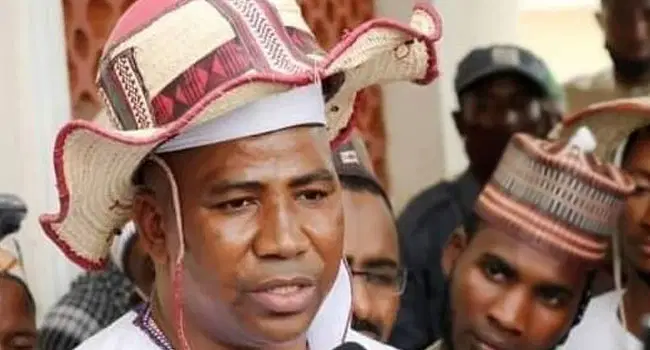
The decision was confirmed by the Chairman of the Taraba State Environmental and Sanitation Agency, Hon. Illiya Kefas, during a media briefing in Jalingo.
Kefas explained that the move followed directives from Governor Agbu Kefas. He said the government needed to manage growing financial obligations after employing additional workers into the state and local government services.
According to him, available resources have become stretched due to recent recruitment exercises.
Moreover, he noted that allocations received from the Federation Account have remained limited despite increasing responsibilities.
The chairman defended the decision and insisted it was necessary for the agency’s survival.
“The decision was taken following directives from Governor Agbu Kefas as part of efforts to accommodate newly recruited workers in the state and local government civil services.”
Records show that the workers were initially paid N20,000 monthly when the programme began in 2023.
However, their allowance was reduced to N15,000 in 2024. Meanwhile, reports indicate that workers received only N10,000 for May 2026.
Furthermore, concerns have been raised about the impact of the decision on families who depend on the income for daily survival.
Kefas also revealed that the agency handles several operational expenses across the state.
According to him, funds are used to support coordinators, supervisors, monitoring teams and casual workers.
In addition, sanitation activities and waste management projects are funded in all 16 local government areas.

The agency chairman maintained that difficult financial realities made the decision unavoidable.
“Anyone unwilling to work for the new amount was free to leave the programme.”
Meanwhile, some residents believe more support should be provided to workers performing essential environmental duties.
Others argue that governments across Nigeria face increasing financial pressures due to rising operational costs.
Furthermore, labour advocates have stressed the need for policies that protect vulnerable workers from economic hardship.