

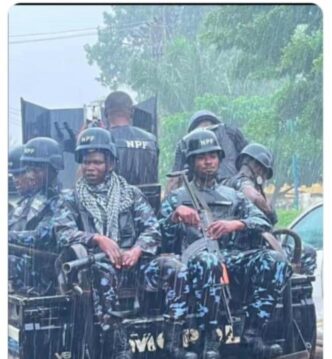
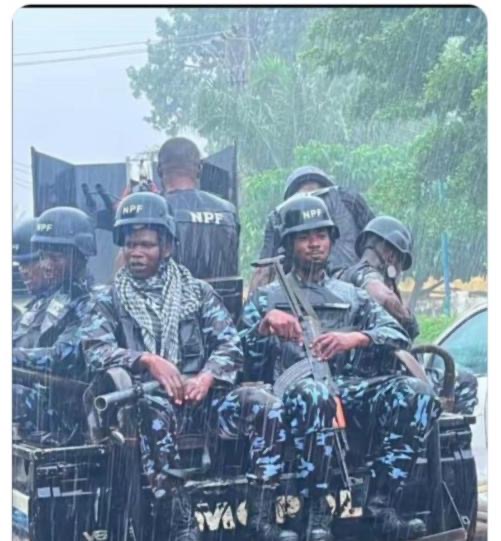
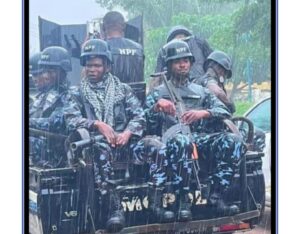
A viral photograph showing several Nigerian police officers sitting in the open back of a pickup van during heavy rainfall has triggered a nationwide conversation about the realities faced by security personnel.
The image, which circulated widely on social media, showed officers drenched by rain while carrying exposed rifles.
There was no visible shelter, rain gear, or protection from the weather. While some Nigerians praised the officers’ dedication, others questioned the conditions under which they work.
However, beyond the reactions online, the photograph has drawn attention to a deeper issue.
The discussion was further amplified by an article written by Lanre Olagunju, Editor of CheckClimate.Africa. In the piece, he argued that many Nigerians often criticize the police without fully appreciating the challenges they face.
Referring to a Yoruba proverb, he wrote: “Alaaru t’on jẹ búrẹ́dì, ṣe awo orí ẹ l’ón jẹ́ ti kò mọ̀.” The proverb was explained as a reminder that people sometimes fail to value what ultimately sustains them.
According to the article, many police officers are expected to tackle increasingly dangerous threats. These include kidnappers, armed robbers, terrorists, and organized criminal groups. Moreover, some of these groups reportedly possess sophisticated weapons and advanced operational experience.
The writer noted that many officers continue to work with limited resources. In addition, inadequate welfare support and aging equipment have been cited as major concerns.
Attention was also drawn to recent losses suffered by the force. On May 8, 17 officers were reportedly killed during an attack on the Nigerian Army Special Forces School in Buni Yadi, Yobe State. The officers were said to be undergoing counter-terrorism training when the attack occurred.
Furthermore, three Explosive Ordnance Disposal officers later lost their lives in Zamfara State after an armored vehicle struck an improvised explosive device during patrol operations.
The article stated: “They did not die while extorting motorists at checkpoints. They did not die while sitting behind office desks. They died preparing to protect a country most of them would never become wealthy serving.”
Meanwhile, the conversation has gained additional significance as families of fallen officers continue to cope with their losses. Many widows and children have been left behind, while colleagues continue reporting for duty despite the risks involved.
The author stressed that police accountability remains important. However, he argued that sacrifice should also be recognized. Therefore, calls for reform should be matched with efforts to improve welfare, training, and operational support.
According to him, the police remain an important part of society. Their successes and failures are often reflections of broader national realities.
For more details: securityfocus.ng