

A new threat emerging from the Strait of Hormuz is now raising concerns far beyond oil markets and military tensions.
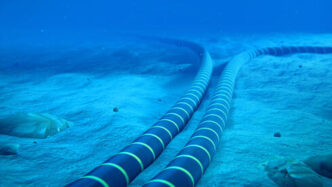
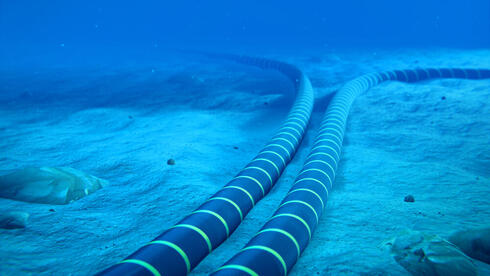
Iran is reportedly considering new charges on subsea internet cables running beneath the strategic waterway, a move that could affect global internet traffic, banking systems, and digital communication worldwide.
The development has triggered fresh debate over the growing importance of underwater internet infrastructure.
Iranian officials and state-linked media recently discussed plans targeting submarine cables connected to major global technology firms. Companies such as Google, Microsoft, Meta, and Amazon were specifically mentioned in reports tied to the proposal.
“We will impose fees on internet cables,” Iranian military spokesperson Ebrahim Zolfaghari declared on X last week.
According to Iranian media reports, the proposal would require cable operators to pay licensing fees for passage through Iranian-controlled waters. Furthermore, maintenance and repair rights could reportedly be handed exclusively to Iranian firms.
The issue has become more serious because subsea cables carry most of the world’s internet and financial traffic.
Meanwhile, fears have grown after state-linked outlets hinted that cable traffic could face disruption if foreign companies fail to cooperate.
Although Iran has not openly threatened sabotage.
CNN reported that several cable systems avoid Iranian waters due to long-standing regional tensions. However, two major systems, Falcon and Gulf Bridge International, reportedly pass through Iranian territorial waters.
Experts say any attack on the cables could affect internet services, financial transfers, military communication systems, and cloud-based platforms. In addition, online streaming, gaming, and remote work operations could also suffer major interruptions.
“It aims to impose such a hefty cost on the global economy that no-one will dare attack Iran again,” said Dina Esfandiary, Middle East lead at Bloomberg Economics.
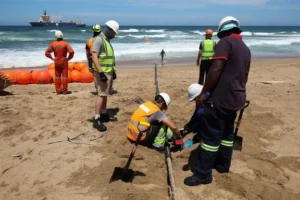
Researcher Mostafa Ahmed explained that many subsea cables were intentionally placed closer to Oman because of fears surrounding Iranian waters. Nevertheless, the growing tension has renewed concerns about digital security in the Gulf region.
Iran’s Revolutionary Guard Corps is also believed to possess underwater drones, combat divers, and mini-submarines.
The subsea cables issue has especially alarmed countries relying heavily on internet trade and outsourcing. India, Gulf nations, and parts of East Africa could reportedly face severe economic losses if disruptions occur.
Iranian media has compared the move to Egypt’s control over subsea cables passing through the Suez Canal.
“Of course, for existing cables, Iran has to abide by the contract that had been made when the cable was laid,” international law professor Irini Papanicolopulu told CNN.
“But for new ones, any state, including Iran, can decide if and under what conditions, cables can be laid in its territorial sea,” she added.
Despite the growing concerns, telecom research firm TeleGeography noted that cables crossing the Strait of Hormuz currently account for less than one percent of global international bandwidth.
Still, experts warn that even limited disruption inside the narrow waterway could trigger wider digital and economic consequences. Furthermore, tensions in the region have already complicated cable repair operations due to security concerns.
Source: CNN