

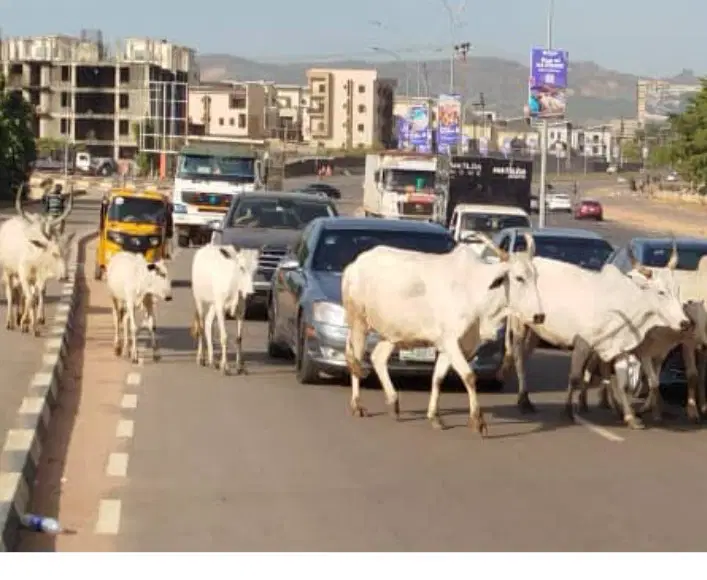
The Federal Government has revealed plans to relocate pastoralists to hundreds of protected grazing reserves.
The announcement has attracted attention because cattle roaming has remained a long-standing issue in many parts of Nigeria. Moreover, authorities believe the new strategy could improve livestock productivity, strengthen animal health management, and reduce challenges linked to open grazing.
At the center of the plan is the rehabilitation and use of 470 gazetted grazing reserves spread across the country.
Furthermore, government officials say the initiative will support a transition from traditional cattle movement to a more settled and organized livestock system.
The Minister of Livestock Development, Idi Maiha, disclosed the plan while discussing the implementation of the National Dairy Policy Framework. According to him, the goal is to modernize livestock production and improve the sector’s contribution to the economy.
Asked whether Nigerians should expect an end to cattle roaming in cities such as Abuja and Lagos, the minister responded positively. Consequently, many residents who have long expressed concerns about cattle movement through urban areas may see significant changes in the coming years.
He explained that open grazing is becoming increasingly difficult to sustain. In addition, long-distance cattle movement has been linked to low productivity and challenges in meeting Nigeria’s growing dairy needs.
“We are sensitising pastoralists to adopt a sedentary lifestyle. Once they settle in designated reserves, all the interventions required to improve productivity become easier to implement,” he said.
Furthermore, the government plans to introduce technology that will help monitor livestock movement. According to the minister, cattle will be fitted with identification tags that can alert authorities when animals move beyond approved areas.
“We are also introducing jaw-tagging of animals so that once a cow steps outside its designated boundary, an alarm is triggered, indicating it has either strayed or been stolen, and it can be returned immediately.”
Meanwhile, the minister highlighted another major challenge facing the livestock sector. He noted that milk production in Nigeria remains significantly lower than in several African countries.
According to him, Nigerian cows currently produce between 1.2 and 2 litres of milk daily on average. However, in countries such as Kenya, daily production can reach as much as 30 litres per cow.
Maiha attributed the gap to poor animal genetics, weak feeding systems, and limited disease control measures. Moreover, he noted that despite having an estimated 270 million ruminants, including cattle, sheep, goats, and camels, Nigeria has not fully modernized its livestock breeding systems.
“While every other thing in our national space has changed, we have not been able to transform our livestock by introducing new genetics or selecting based on performance traits.
‘’Either of those approaches would have lifted yields from two litres to 15, 20, 30 or even 50 litres per cow per day.”
To address these issues, the government is focusing on three key areas. These include better feeding methods, improved disease control, and stronger livestock genetics. Furthermore, the National Dairy Policy Framework is being implemented to increase local milk production and reduce dependence on imports.
The efforts continue, the proposed reforms are being viewed as one of the most significant attempts to modernize livestock production in Nigeria.