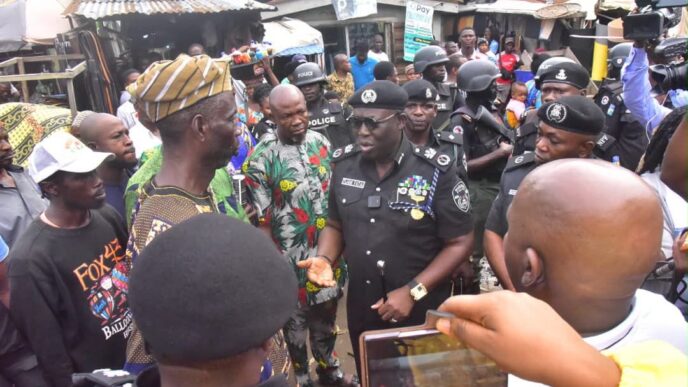


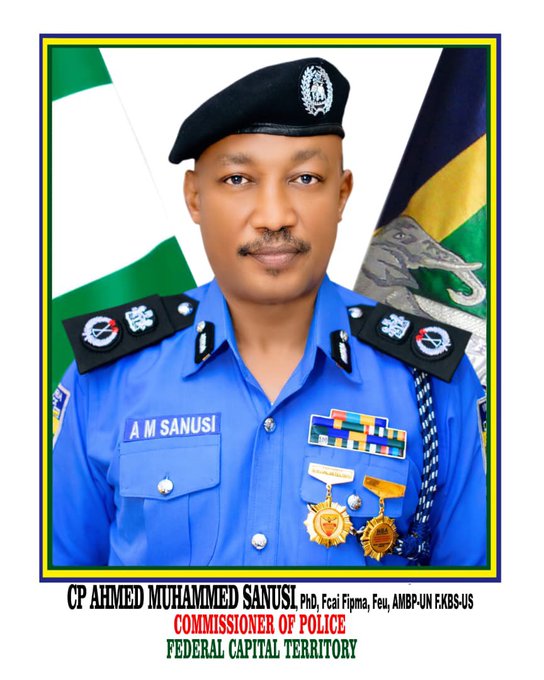
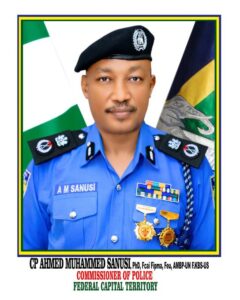
The growing conversation around police reform in Nigeria has taken a new turn as the Commissioner of Police for the Federal Capital Territory (FCT), Muhammad Sanusi Ahmed, highlighted how community policing, professionalism and modern technology are helping to improve security across Abuja.
Speaking during an interview with Priscimedia, Ahmed said recent security gains in the nation’s capital have been achieved through stronger cooperation between residents and law enforcement officers.
He noted that while many Nigerians often focus on challenges within the policing system, significant efforts are being made to improve public safety and strengthen trust between officers and communities.
The development comes at a time when discussions around police accountability, body cameras and security reforms continue to dominate public discourse across Nigeria.
According to the FCT, CP, community policing remains one of the most effective tools in crime prevention. He explained that the approach is built on trust, accessibility and the willingness of citizens to share useful information with security agencies.
“Community policing, visibility policing these are what have really helped us in Abuja,” Ahmed said.
He added that proactive policing has helped officers respond to threats before they escalate into major security incidents.
Ahmed explained that residents now provide more credible information to the police. Such information is then converted into actionable intelligence and used to prevent crime.
Furthermore, he said collaboration between citizens and law enforcement agencies has produced positive results in tackling criminal activities.
On the issue of kidnapping and violent crime, the commissioner stated that police operatives have continued to respond swiftly whenever incidents occur.
“We are doing our best, we are arresting them and we are prosecuting them,” he said.
He also revealed that security operations have disrupted criminal movements in several locations across Abuja.
Meanwhile, another aspects of the discussion was about body cameras.
Ahmed acknowledged that body cameras can play an important role in modern policing. However, he clarified that the devices are not operational weapons but accountability tools.
“Yes,” he responded when asked whether police officers need body cameras.
He further explained: “Body cam will not help a policeman to achieve any arrest. It will only provide us with evidence as to the actions of those policemen.”
According to him, body cameras can help prevent false accusations while also documenting interactions between officers and members of the public. Therefore, they can improve transparency and professionalism within the force.
The commissioner noted that technology is already playing a major role in intelligence gathering through specialized police units that analyze information and support operational decisions.
Ahmed stressed that police reforms under the leadership of Inspector-General of Police Olatunji Rilwan Disu.
“The epitome of professionalism is the current Operational police,” he said.
The leadership of the Inspector General of Police has been fantastic he further explained that officers found guilty of misconduct are sanctioned accordingly.
Ahmed also credited many of the command’s recent achievements to the leadership and directives of the Inspector-General of Police, IGP Olatunji Rilwan Disu. According to him, several of the successes recorded in the FCT have been driven by reforms, operational strategies and professional standards introduced by the IGP.
The commissioner said the command’s response to cases involving robbery, kidnapping and other criminal activities has been strengthened through guidance from the police leadership.
Ahmed further pointed to the arrest of suspected young adult criminals involved in traffic-related robberies and other street crimes as examples of ongoing efforts to make Abuja safer. According to him, such operations were carried out in line with the broader security vision championed by the Inspector-General.
“The Inspector-General has continued to provide leadership and direction for commands across the country,” Ahmed said.
In addition, personnel continue to undergo training and retraining programmes to improve operational effectiveness and public relations.
Meanwhile, the police commissioner called on Abuja residents to remain vigilant and support law enforcement agencies with timely information.
He advised citizens to report suspicious movements, strange faces and unusual activities within their communities. Furthermore, he encouraged residents to make use of emergency response lines whenever assistance is needed.
Emergency lines: 0803-200-3913, 0705-733-7653
As debates about security reforms continue nationwide, the FCT command believes stronger cooperation between citizens and police officers remains the foundation for safer communities.