

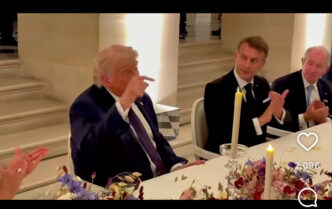
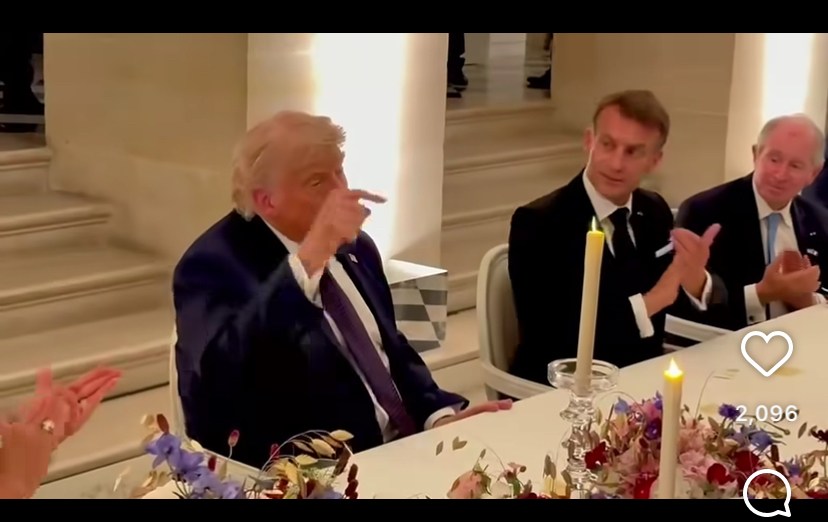
A major diplomatic development unfolded in Europe as US President Donald Trump signed a US-Iran agreement aimed at ending long-running hostilities between the two nations.
The signing took place at the Palace of Versailles in France, shortly before a high-level dinner hosted by French President Emmanuel Macron.
The US-Iran agreement Versailles deal was signed late Wednesday, June 17, marking what officials described as a framework to reduce military tensions and restore limited cooperation.
Meanwhile, Iran’s President Masoud Pezeshkian reportedly signed the agreement separately from Tehran on the same day. In addition, US Vice-President JD Vance is expected to formalise the arrangement at a follow-up ceremony in Geneva on Friday.
Iran’s chief negotiator Mohammad Bagher Ghalibaf criticised the deal strongly, stating:
“The agreement is a record of US failure. People will see it and judge.”
Furthermore, US President Donald Trump defended the agreement, insisting it was necessary to avoid wider global instability and economic collapse.
He said:
“there is nothing as smart as the market – and the market loves it”.
Trump also added:
“the alternative would be a worldwide depression”, arguing that if he had not struck a deal, “the strait [of Hormuz] would never have been opened. They don’t like floating billion-dollar ships up and down the strait when their rockets are flying overhead and there are mines all over the place.”
In addition, the agreement reportedly includes major economic and strategic measures. These involve easing restrictions on Iranian oil exports, lifting parts of a naval blockade, and unfreezing billions in Iranian assets.
Moreover, a proposed $300 billion reconstruction fund is expected to support Iran’s rebuilding efforts through regional Gulf partnerships. International sanctions could also be reviewed under future implementation stages.
In return, Iran is expected to limit support for allied groups in the region, including Hezbollah. It also reaffirms commitments not to pursue nuclear weapons development.
The deal further allows toll-free shipping through the Strait of Hormuz for 60 days. However, Iranian officials warned that charges could resume afterward, depending on implementation progress.
Furthermore, the planned Geneva signing ceremony is expected to clarify enforcement mechanisms and address outstanding concerns from both sides.