

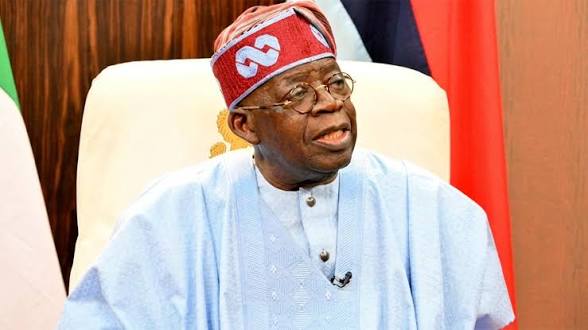
A strong message has been delivered at Nigeria’s Workers’ Day celebration, as President Bola Ahmed Tinubu declared insecurity and poverty as national emergencies.
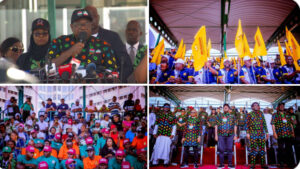
Speaking at Eagle Square in Abuja, the president addressed thousands of workers and labour leaders. He explained that the Nigeria insecurity and poverty crisis is a serious threat to productivity and national stability.
However, the president made it clear that his administration is taking action. His speech aligned with the global May Day theme focused on decent work and economic dignity.
“There cannot be decent work where workers fear for their lives, where wages cannot feed a family, or where insecurity disrupts farms, factories, markets, and other economic activities. These hydra-headed challenges, the government notes, have been treated as a national emergency due to their impact on productivity, livelihoods, and the confidence of both workers and employers.”
Meanwhile, Tinubu highlighted several steps already taken to address the crisis. One of them is the Community Protection Guards Initiative, which has recruited 45,000 young Nigerians.
Moreover, the president pointed to ongoing economic support programmes. Cash transfers have reportedly reached 15 million vulnerable households across the country. In addition, about 7.5 million Nigerians have been lifted out of poverty through these efforts.
Furthermore, large infrastructure projects have played a key role in job creation. Projects like the Lagos-Calabar Coastal Highway and the Ajaokuta-Kaduna-Kano Gas Pipeline have created over 600,000 jobs.
The president noted that a new minimum wage has been introduced. Pension arrears have been cleared, and gratuity payments resumed in January 2026.
In addition, over 800,000 informal workers have been enrolled in the micro-pension scheme. Small businesses are also benefiting from a N200 billion support fund.
Meanwhile, the president urged labour unions to embrace dialogue instead of strikes.
“Strike should be the last resort, not the first,” he said.
However, the administration acknowledged that challenges remain.
“The administration also acknowledged that insecurity and poverty remain major obstacles to building a peaceful Nigeria where citizens can ‘sleep with their eyes closed,’ and to achieving the Decent Work Agenda as envisioned by the International Labour Organization.”
Therefore, the government has promised sustained action to improve safety and economic growth.