


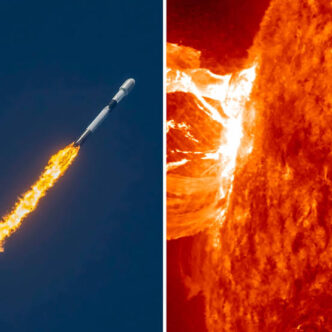
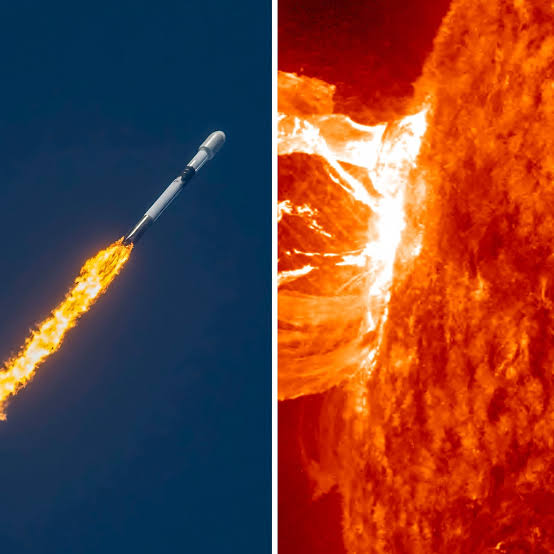
Elon Musk’s Starlink satellites are falling back to Earth faster than expected as solar activity grows stronger.
Scientists say powerful solar storms are speeding up the loss of altitude among satellites orbiting our planet.
The findings raise fresh concerns about satellite safety as space becomes more crowded.
They also show how changes in the Sun can affect technology people rely on every day.
Researchers from NASA and the University of Maryland studied 523 Starlink satellites between 2020 and 2024.
Their analysis found that stronger solar activity accelerated the satellites’ orbital decay, bringing their return to Earth sooner than predicted.
The effect begins in Earth’s upper atmosphere. When powerful solar storms reach Earth, they heat the atmosphere and cause it to expand.
This makes the gas around orbiting satellites denser, even hundreds of kilometres above the surface.
The extra gas creates more drag, gradually slowing satellites and reducing their orbital altitude.
During a major geomagnetic storm in May 2024, one Starlink satellite dropped about 176 kilometres in less than two days.
Researchers found that it reached the edge of space around 11 days earlier than its predicted reentry date.
The findings show how quickly space weather can change a satellite’s expected lifespan.
The Starlink satellites solar storms connection is becoming increasingly important as companies launch more spacecraft into orbit.
SpaceX faced a similar problem in February 2022. A geomagnetic storm contributed to the loss of 38 newly launched Starlink satellites before they reached their intended orbits.
However, the risk extends beyond Starlink. Satellites support communications, navigation, weather monitoring and other essential services worldwide.
Strong solar activity can shorten satellite lifetimes and increase fuel use. It can also make collision predictions less reliable by changing spacecraft trajectories.
Scientists say better knowledge of solar activity is vital for managing Earth’s increasingly crowded orbit. Operators need accurate forecasts to plan satellite movements and reduce risks.
Solar storms are not responsible for every satellite returning to Earth. SpaceX also deliberately retires satellites and guides them out of orbit when necessary.
Still, the research highlights how solar activity can disrupt satellite operations. Understanding these effects will become more important as thousands of spacecraft continue operating above Earth.