



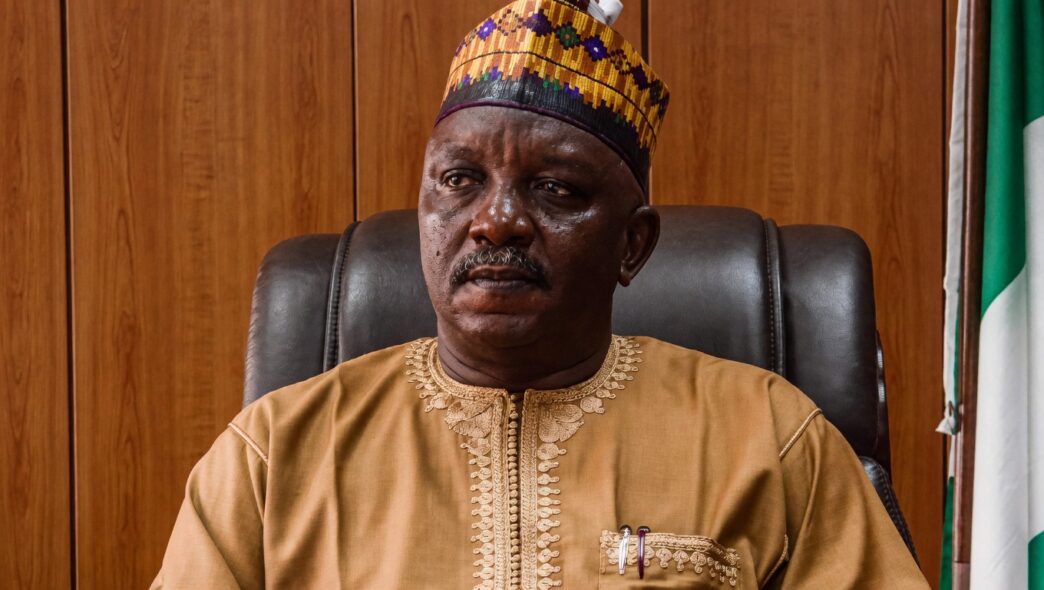
Former Minister of Power, Saleh Mamman, has been sentenced to 75 years in prison after a Federal High Court in Abuja found him guilty of fraud and money laundering involving about N33.8 billion.
Justice James Omotosho delivered the judgment after convicting Mamman on all 12 counts filed against him by the Economic and Financial Crimes Commission, EFCC.
The court sentenced the former minister to seven years imprisonment on 10 separate counts. However, he received three years and two years respectively on counts four and five.
According to the court, the sentences will run consecutively. In addition, no option of fine was granted except on count four, where the defendant may pay N10 million.
The court also ordered the forfeiture of foreign currencies and four Abuja properties connected to the illegal transactions.
During the ruling, Justice Omotosho stated that the prosecution successfully established its case beyond reasonable doubt.
“The evidence of the prosecution is overwhelming as against the scanty and almost absent defence of the defendant,” the judge said.
He further added, “The defendant did not offer any credible evidence to rebut the prosecution’s case.”
Investigators accused the former minister of diverting money linked to the Mambilla Hydroelectric Power Project and the Zungeru Hydroelectric Power Plant project.

Meanwhile, the court also found him guilty of making a cash payment of $655,700 for a property in Abuja without using any financial institution.
According to the judge, the action violated financial regulations designed to monitor suspicious transactions and reduce money laundering.
“Rather than creating a legacy to tackle the epileptic power supply in the country, the defendant was living large at the expense of ordinary citizens,” Justice Omotosho said.
The judge further stated, “Little wonder that Nigerians have remained in darkness till today.”
Furthermore, the ruling has renewed conversations about accountability in Nigeria’s public sector.
Meanwhile, EFCC has maintained that the prosecution reflects its commitment to fighting corruption and recovering public funds.