

A shift is taking place within the Nigeria Police Force, and security experts believe it could redefine the country’s fight against crime. Rather than relying on isolated operations, police commands across Nigeria are increasingly working together, sharing intelligence and conducting joint operations that cut across state boundaries.
The growing Police collaboration has already produced visible results, with successful operations against kidnappers, armed robbers and other violent criminal groups.
The latest observations were highlighted in an article written by LANRE OLAGUNJU, Editor of CheckClimate.Africa, who argued that the police are gradually building a culture where cooperation, visible leadership and intelligence-sharing are becoming the new standard.
Leadership is no longer being measured only from offices and command centres. Instead, senior police officers are increasingly taking part in field operations alongside their personnel.
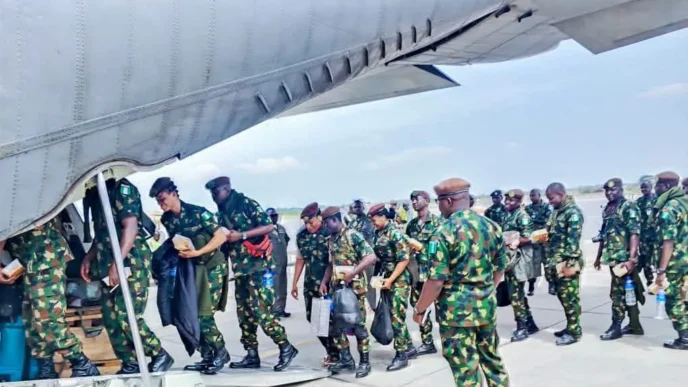
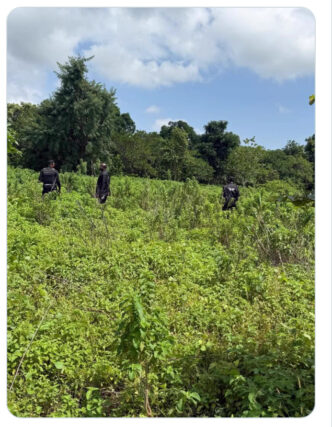
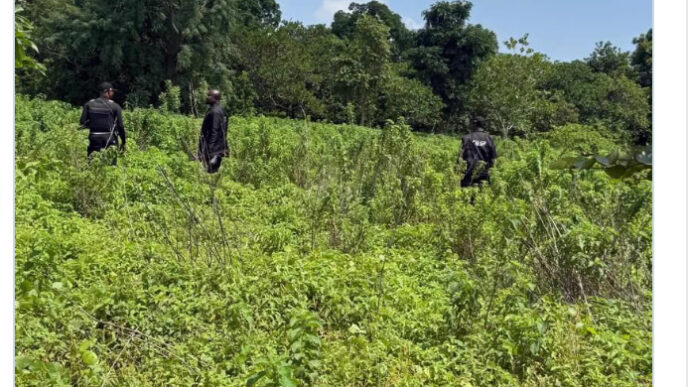
One example cited was the recent operation led by the Commissioner of Police for the Federal Capital Territory, CP Ahmed Muhammed Sanusi, who personally joined a joint security mission into the Paze-Byazhin forests on the outskirts of Abuja.
The operation reportedly dismantled kidnappers’ camps, rescued victims, arrested suspects and disrupted criminal hideouts. However, the article argued that the greatest achievement went beyond the arrests.
It noted that visible leadership strengthens confidence among officers and demonstrates that policing is a shared responsibility rather than one left only to junior personnel.
Furthermore, the article compared successful policing to successful football teams, where teamwork often matters more than individual brilliance.
It explained that great football managers succeed because they build strong cultures based on healthy competition, teamwork and shared goals.
Similarly, the Nigeria Police Force appears to be embracing those same principles.
For many years, criminal groups exploited state boundaries to escape arrest.
Kidnappers often crossed into neighbouring states whenever security pressure increased.
Armed robbers and other criminal gangs also took advantage of administrative gaps between police commands.
However, that pattern is gradually changing.
The article pointed to the launch of Operation Kosaye, jointly executed by the Lagos and Ogun State Police Commands.
The operation has already resulted in several arrests, rescued kidnapping victims and recovered illegal weapons.
According to the article, the operation was built on a simple but effective idea that criminals should never benefit from state boundaries.

Meanwhile, another example was identified along the Rivers and Akwa Ibom border.
Police commissioners from both states have intensified joint patrols, operational inspections and intelligence sharing.
Instead of treating the boundary as the end of one command, both police formations now regard it as a shared operational space.
Moreover, these separate operations appear to reflect a broader policing strategy.
The article identified four major principles behind the emerging system.
These include visible leadership, intelligence-led operations, collaboration across commands and healthy competition among police formations.
Individually, none of these ideas is entirely new.
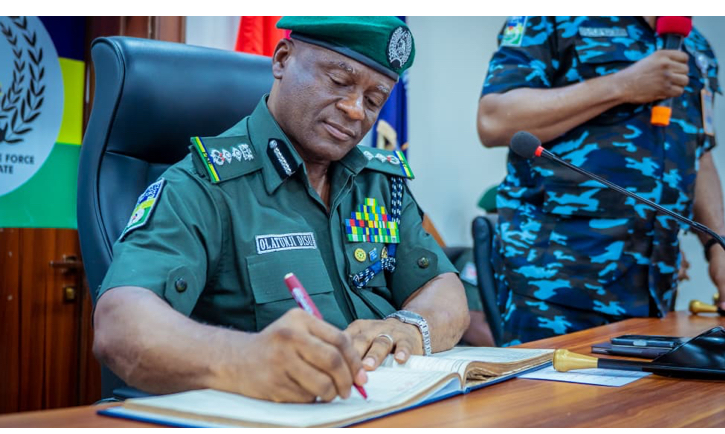
Collectively, however, they represent a significant shift toward modern policing, and that growing culture is becoming more noticeable under Inspector-General of Police Olatunji Disu.
Commissioners are increasingly expected to work together rather than operate independently.
Consequently, every successful operation raises expectations for other commands.
It referenced public discussions surrounding reports from Rivers State, where allegations emerged that some officers experienced undignified treatment during an inspection.
While professional standards remain essential, the article argued that respect and discipline should exist together.
Furthermore, the author believes the next stage of reform should involve Divisional Police Officers and Area Commanders.
Neighbouring divisions, should regularly exchange intelligence instead of waiting for official directives.
Likewise, Area Commanders should share operational resources before criminals exploit jurisdictional weaknesses. Better welfare, improved equipment, advanced technology and modern training remain necessary.
Nevertheless, the growing Nigeria Police collaboration is already being viewed as one of the most encouraging developments within the Force.
Therefore, “Because the strongest police force is not necessarily the one with the largest numbers. It is the one that learns to think and fight as one.”