


China has unveiled another major step in its growing relationship with Nigeria, saying it is ready to share its governance and development experience.
The move was announced during a high-level dialogue in Abuja, where Chinese and Nigerian officials discussed governance, modernization, poverty reduction and long-term development strategies.
Chinese officials stressed that the goal is not for Nigeria or other African countries to copy China’s political system. Instead, they encouraged every nation to build a development model that reflects its own history, culture and national priorities.
The event, organised by the Centre for China Studies at the China Chamber of Commerce in Nigeria, attracted diplomats, academics and policy experts.
Discussions focused on how China’s development journey could provide useful lessons for African countries seeking inclusive economic growth.
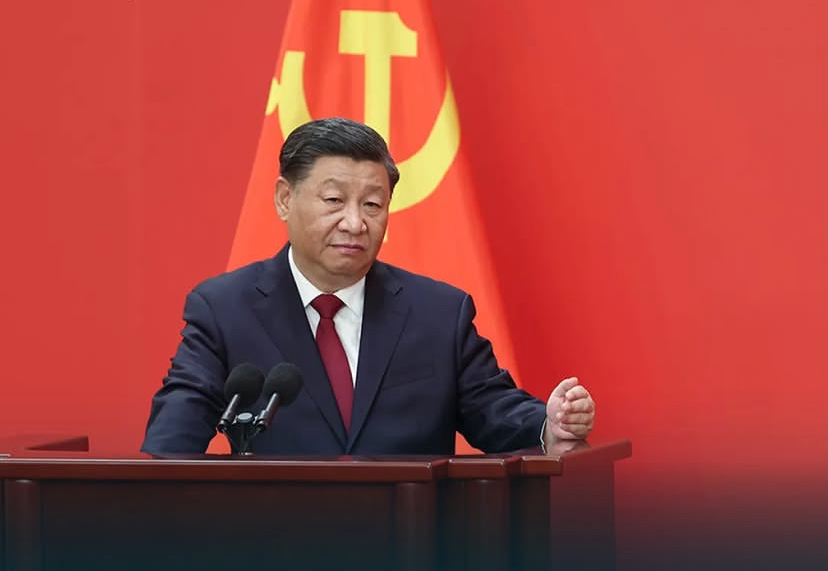
Speaking during the event, Chinese Embassy Counsellor Wang Jun described Xi Jinping: The Governance of China as an important guide to understanding China’s governance philosophy and development model.
According to him, the publication explains China’s approach to major policy areas, including poverty reduction, environmental protection and long-term national planning.
Wang noted that China’s success in lifting hundreds of millions of people out of poverty offers valuable lessons for developing countries.
He explained that China remains willing to share its experience with Nigeria and other African nations.
However, he maintained that each country should design policies that suit its own realities.
According to Wang, development should never depend on copying another country’s system.
He also highlighted China’s environmental policy, referring to the principle that “lucid waters and lush mountains are invaluable assets,” which promotes balancing economic growth with environmental protection.
Furthermore, Wang said China-Africa cooperation continues to expand through a shared vision of mutual development and long-term partnership.
Meanwhile, Provost of the Anti-Corruption Academy of Nigeria and Director of the Centre for Contemporary China-Africa Research, Prof. Sheriff Ghali Ibrahim, encouraged participants to approach governance discussions with an open mind.
He explained that no country possesses every solution to governance challenges.
Instead, he urged policymakers to study different development models and adopt practical ideas that match local needs.
Prof. Ibrahim described The Governance of China as a collection of President Xi Jinping’s speeches and writings covering reform, modernization, rule of law, ecological sustainability and national development.
According to him, earlier editions focused on reform and economic opening, while later volumes examined poverty reduction, pandemic response and modernization.
He also referenced Selected Readings of Xi Jinping, describing it as another useful resource for understanding China’s long-term development priorities.
Furthermore, Prof. Ibrahim identified several principles behind China’s modernization strategy.
These include people-focused development, shared prosperity, cultural progress, environmental sustainability and peaceful development.
He argued that China’s approach places greater emphasis on cooperation than expansion.
The discussion also examined the Belt and Road Initiative.
According to Prof. Ibrahim, the programme extends beyond infrastructure development.
It also supports policy coordination, trade, financial cooperation, digital connectivity and stronger people-to-people relationships.
In addition, he highlighted China’s holistic approach to national security.
He explained that sustainable development depends on balancing economic growth with political stability, social development and environmental protection.
Prof. Ibrahim noted that both countries now cooperate in infrastructure, nuclear energy, media development and capacity building.
He also revealed that trade between Nigeria and China has exceeded 28 billion dollars, reflecting stronger economic engagement.
Moreover, he pointed to China’s tariff reductions on selected African exports as an opportunity for African industries to increase local processing instead of exporting raw materials.
The dialogue concluded with renewed calls for stronger knowledge exchange and deeper policy collaboration.
Participants also encouraged continued cooperation on governance innovation, modernization and sustainable development.
Although governance models differ across countries, speakers agreed that practical lessons can still be shared without replacing national priorities.