


Mobile phone users across Nigeria are facing a growing wave of unwanted calls, with a new report revealing a troubling rise in spam and fraud attempts.
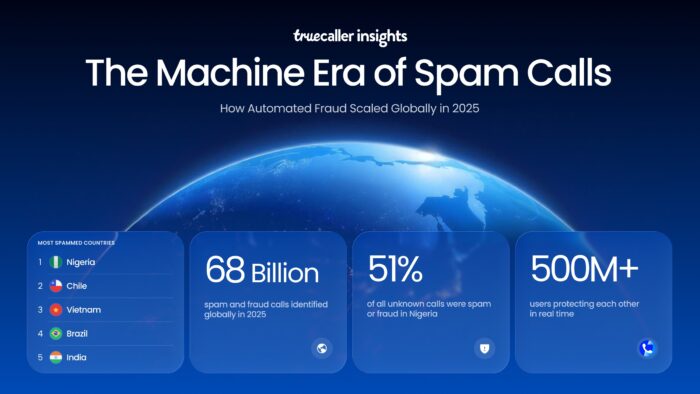
Fresh data released by Truecaller has ranked Nigeria as the most spammed country in Africa for 2025.
According to the findings, 51 per cent of unfamiliar calls in Nigeria were flagged as suspicious. This means one out of every two unknown calls received by users could be deceptive, unwanted, or linked to possible fraud.
Many Nigerians already complain about constant telemarketing calls, fake promotions, and suspicious network-related messages.
Globally, Nigeria ranked eighth among the world’s most spammed countries. However, the country topped the African chart ahead of South Africa, Kenya, Ghana, and Ethiopia.
Indonesia led the global ranking with 79 per cent of unknown calls marked as spam. Chile followed closely with 70 per cent, while Vietnam, Brazil, and India also made the top five.
Meanwhile, the report explained that Nigeria’s spam situation differs from many other countries. In several nations, most spam calls are linked to fake banking alerts or debt collection threats.
However, Nigeria’s case appears more complicated because telecom-related calls dominate the trend.
The report stated, “In many countries, spam is driven largely by financial impersonation scams or aggressive debt collection. In Nigeria, however, telecom and operator-related outreach dominates the landscape, accounting for 35 per cent of all spam calls, the highest concentration of any African market in the report.”

Furthermore, telemarketing and sales calls accounted for 10 per cent of the spam activity, while direct scam attempts made up six per cent.
The Nigeria spam calls report also noted that many suspicious calls appear similar to legitimate telecom messages.
“This structure creates a particularly confusing environment for users,” the report explained.
“When a significant share of unsolicited calls appears to come from telecom-related services or agents, it becomes difficult to distinguish between legitimate network updates, marketing campaigns, and fraudulent attempts.”
Moreover, the report warned that the overlap between official communication and spam activity could increase the risk of scams across the country.
A similar trend was reportedly observed in Brazil, where telecom-linked spam also dominates. Researchers suggested that some telecom systems in large markets may unknowingly contribute to the increase in unwanted calls.
The latest findings also highlight the urgent need for stronger telecom regulations and improved awareness campaigns to protect users from growing spam threats.