

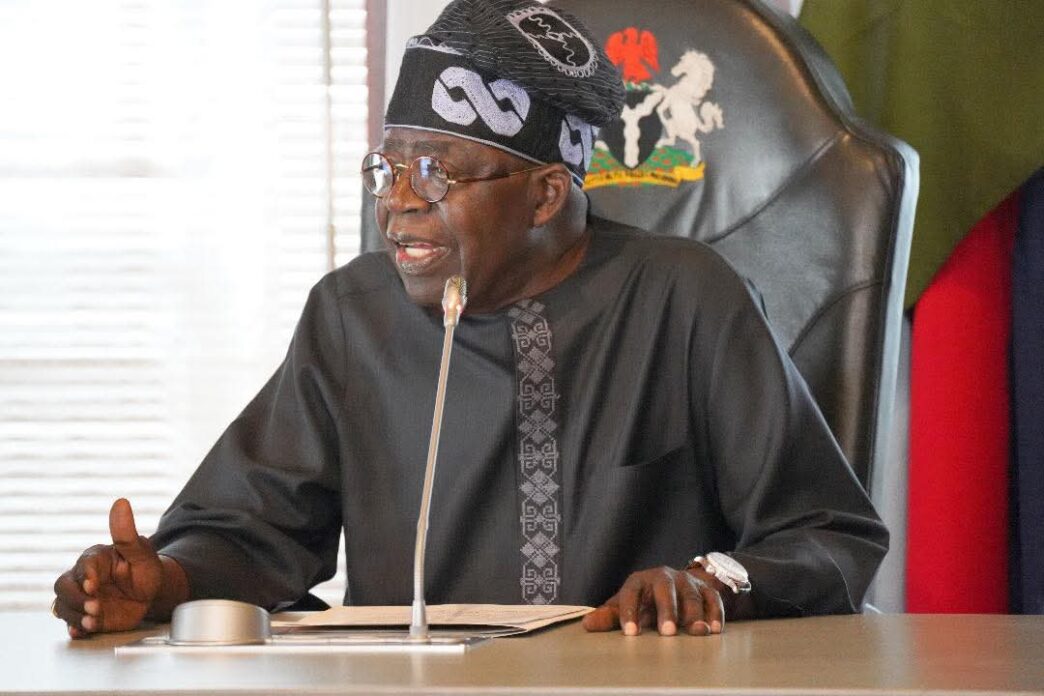
A major step toward introducing state police in Nigeria has been taken after President Bola Tinubu appointed his Chief of Staff, Femi Gbajabiamila, to lead the Presidential Working Group on the National Policing Bill.
The move signals that the Federal Government is pushing ahead with plans to create the legal framework needed for state policing across the country.
The committee was inaugurated on Tuesday at the Presidential Villa in Abuja. It was set up shortly after the National Assembly passed the Constitution Alteration (State Police) Bill, 2026. However, government officials explained that another law is still required before the new policing system can become operational.
The Policing Bill is expected to provide the legal structure that will guide how state police will function. Moreover, it will define the relationship between federal and state security agencies while introducing clear standards for accountability and oversight.
According to a statement issued by the President’s Special Adviser on Information and Strategy, Bayo Onanuga, the working group has been assigned the responsibility of preparing an implementation-ready draft of the proposed legislation.
President Tinubu, who was represented by Gbajabiamila during the inauguration, explained that passing the constitutional amendment alone would not be enough to establish state police.
“The Constitution Amendment Bill establishes the framework for dual policing, but it does not operationalise it. That work is left to the National Policing Bill,” the President said.
He noted that the proposed law would address important issues before state police can begin operations.
These include minimum policing standards, state readiness, coordination between federal and state police, human rights protection, accountability systems and funding arrangements.
Furthermore, Tinubu stressed that the committee should not wait until the constitutional amendment process is completed before preparing the legislation.
“The Working Group has been constituted to produce a technically robust, implementation-ready draft National Policing Bill for transmission to the National Assembly.
“We must not wait until the constitutional process is concluded before beginning this important assignment,” he added.
The committee consists of several top government officials and stakeholders. They include Attorney-General of the Federation and Minister of Justice, Lateef Fagbemi, National Security Adviser Nuhu Ribadu, Nigerian Bar Association President Adam Osigwe, Ogun State Governor and Nigeria Governors’ Forum Chairman Dapo Abiodun, Inspector-General of Police Tunji Disu, and the chairman of the NGF Committee on State Police.
Meanwhile, a dedicated secretariat will also be established to provide administrative support for the committee’s work.
Speaking on behalf of state governors, Dapo Abiodun assured the Federal Government of their full cooperation throughout the reform process.
According to him, governors will work closely with their various State Houses of Assembly to ensure the constitutional amendment receives speedy approval once transmitted.
Moreover, Abiodun described the proposed reform as a response to years of public calls for decentralized policing. He added that successful regional security outfits such as Amotekun have already shown that community-based security structures can support national policing efforts.
He also projected that if every state recruits about 6,000 officers, nearly 200,000 additional security personnel could be added to strengthen Nigeria’s policing capacity.
Attorney-General Lateef Fagbemi described the initiative as timely, especially considering the country’s security challenges.
“There is no denying the fact that we are in a critical moment security-wise, and all hands must be on deck,” he said.
He further appealed to governors to ensure that the constitutional amendment is approved without unnecessary delay.
“I appeal to the governors to do their utmost to ensure the early passage of the constitutional amendment because this is a shared responsibility,” Fagbemi added.
The Nigerian Bar Association also welcomed the initiative. However, its President, Adam Osigwe, warned that strong legal safeguards must be included in the proposed law.
“Nigeria can hardly be effectively policed by one national police. We fully support the constitutional amendment providing for state police.
“We must ensure we do not create a monster. The right legal framework must guarantee accountability and prevent oppression,” he noted.
Meanwhile, the National Policing Bill is expected to become one of the most important security reforms under the current administration. Therefore, many Nigerians will closely watch the committee’s recommendations and the progress of the constitutional amendment.