

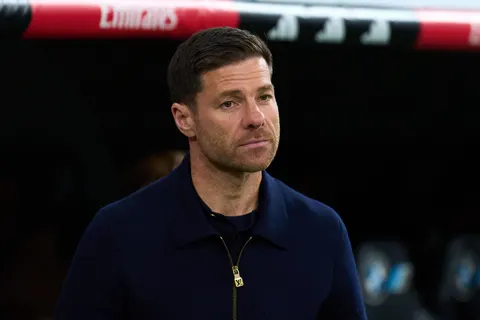
Real Madrid’s brief experiment with Xabi Alonso has ended in unexpected fashion, following reports of deep cracks inside the dressing room that surfaced months before his dismissal.
The former midfield maestro was relieved of his duties on Monday, just seven months into the job, after tensions with players reportedly reached breaking point.
Sources close to the club say the warning signs were already visible as early as November.
During one training session, Alonso was said to have lost his temper and accused his players of behaving like they were in a “nursery.”
The outburst, which stunned several squad members, was described as a moment of frustration rather than a planned confrontation.
However, it marked a turning point in a relationship that was already under strain.
According to Spanish outlet MARCA, the incident was seen internally as “a cry of desperation, of weariness, and almost of boredom.”
The report added that Alonso had grown increasingly annoyed by his inability to get players to meet his tactical demands.

His trademark aggressive pressing style, which brought success at Bayer Leverkusen, was never fully embraced by the Madrid squad.
Meanwhile, results on the pitch failed to ease the pressure. Although some performances showed promise, consistency proved elusive.
Moreover, rumours of a split between Alonso and key senior players continued to circulate.
These concerns were compounded by reports of a lack of alignment between the coach and the club’s board over long-term tactics.
Alonso’s exit came less than 24 hours after a painful 3-2 defeat to Barcelona in the Spanish Super Cup final in Jeddah, Saudi Arabia.
While the loss itself was significant, insiders insist the decision had already been made. The match only hastened an outcome many inside Valdebebas had begun to expect.
In addition, MARCA reported that Alonso had “already begun to leave” Madrid mentally in November. During that period, there was growing talk inside the club about a possible successor.
A noticeable “buzz” reportedly developed around Álvaro Arbeloa, who was then in charge of Madrid’s B team and frequently observed first-team training sessions.
Therefore, Arbeloa’s eventual promotion did not come as a complete surprise. His familiarity with the club culture and players was viewed as a stabilising factor at a tense moment.