

The United States has approved $413 million in security funding for Nigeria and other West African countries, signalling a deeper shift in Washington’s approach to regional insecurity.
The approval followed the signing of the National Defence Authorisation Act (NDAA) into law in December 2025.
The move has drawn attention because it comes amid worsening security challenges across West Africa. Under the 2026 fiscal year budget, the funds were allocated through the United States Africa Command (AFRICOM).
The decision was described as part of a broader defence package worth $901 billion.
Moreover, the law includes a four per cent pay rise for US service members. This marked the 65th consecutive year of defence authorisation by the US government.
Although a country-by-country breakdown was not released, the $413 million represents the full amount requested by AFRICOM.
The funds will be used for operations, maintenance, and counter-insurgency support across Africa.
This development comes as Nigeria continues to battle multiple security threats. These include insurgency in the North-East, banditry in the North-West, and piracy in the Gulf of Guinea.
Meanwhile, other parts of the region remain unstable. Mali is facing renewed militant pressure, while northern Benin has seen violence spill over from the Sahel.
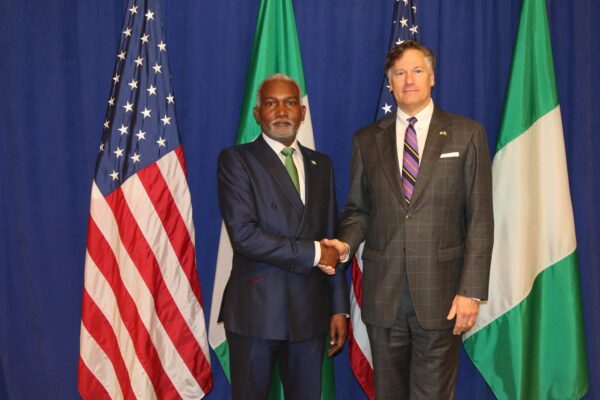
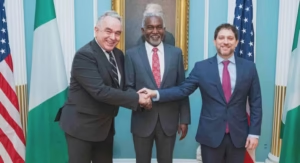
The approval was also linked to rising cooperation between the US and Nigeria. In recent weeks, military equipment was delivered to Nigerian security agencies in Abuja.
AFRICOM confirmed the development, stating: “This delivery supports Nigeria’s ongoing operations and emphasises our shared security partnership.”
Furthermore, the partnership appeared to deepen following US air strikes on suspected terrorist hideouts in Sokoto State.
The strikes were carried out on Christmas Day 2025 in coordination with Nigerian authorities.
These actions suggest a stronger US role in intelligence sharing and operational support. However, officials have stressed that collaboration remains mutual and strategic.
Beyond funding, the NDAA introduced key policy changes affecting Africa. A new Assistant Secretary for African Affairs position was created at the US State Department.
In addition, a Bureau of African Affairs was established. This is expected to improve coordination of US foreign policy across sub-Saharan Africa.
The law also mandates a review of Russia’s military activities in Africa. Therefore, future US strategies involving AFRICOM may be reshaped.