

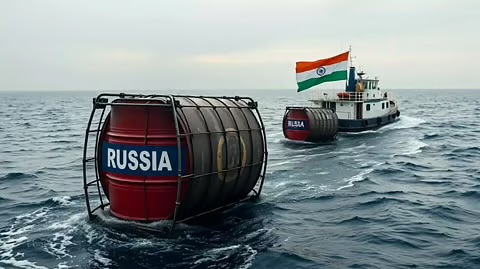
The United States has relaxed part of its sanctions on Russia, allowing some Russian oil stuck at sea to be sold to India.
The decision has raised fresh debate about global energy politics and the ongoing impact of the Russia-Ukraine war.
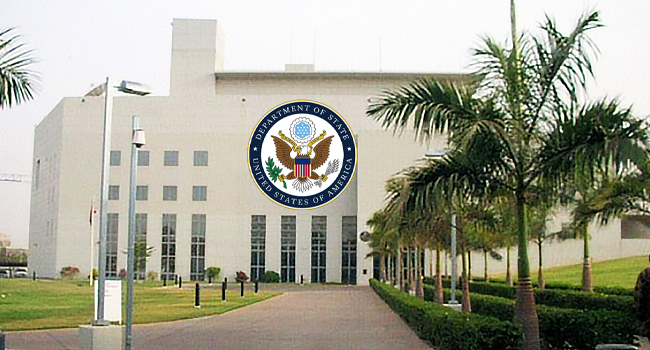
The temporary waiver was issued by the U.S. Department of the Treasury through its sanctions enforcement arm, the Office of Foreign Assets Control.
According to officials, the measure applies only to Russian crude oil and petroleum products that had already been loaded onto ships before March 5, 2026.
However, the authorisation is limited and will expire soon. Transactions linked to the shipments have been permitted only until April 3, 2026.
Meanwhile, the decision has been interpreted as a move to prevent instability in the global oil market.
Energy supply has faced pressure in recent months due to geopolitical tensions and market uncertainty.
Scott Bessent explained that the waiver was introduced mainly to protect global supply chains. “To enable oil to keep flowing into the global market,” he wrote in a post on X.
Moreover, Bessent stressed that the measure was designed to be short-term and tightly controlled. According to him, the decision will not generate major financial gains for Moscow.
“This deliberately short-term measure will not provide significant financial benefit to the Russian government as it only authorizes transactions involving oil already stranded at sea,” Bessent said.
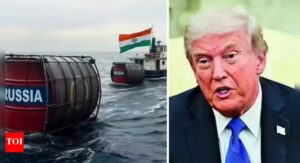
Furthermore, officials indicated that the move may help calm energy markets that have already been strained by international conflicts. The ongoing tensions involving Iran have also created uncertainty around global oil supply.
The decision comes months after strong sanctions were imposed on Russia’s energy sector. U.S. President Donald Trump previously approved restrictions targeting major oil companies such as Lukoil and Rosneft.
Those measures were introduced in response to Russia’s invasion of Ukraine. As a result, many countries and energy companies began searching for alternative suppliers.
However, Russia has attempted to keep its oil exports flowing despite the sanctions. Reports suggest that a network of older oil tankers has been used to transport crude oil to buyers.
Moreover, these vessels are often linked to complex ownership structures.
India has emerged as one of the major buyers of discounted Russian oil since the conflict began. The country has increased imports to support its large energy needs.
Meanwhile, global energy markets continue to react quickly to geopolitical decisions. Even small policy changes can influence oil supply and prices.