

Nigeria has announced a major shift in its cocoa industry, ending the long-standing practice of exporting raw cocoa beans without processing them locally.
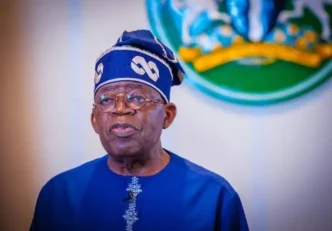
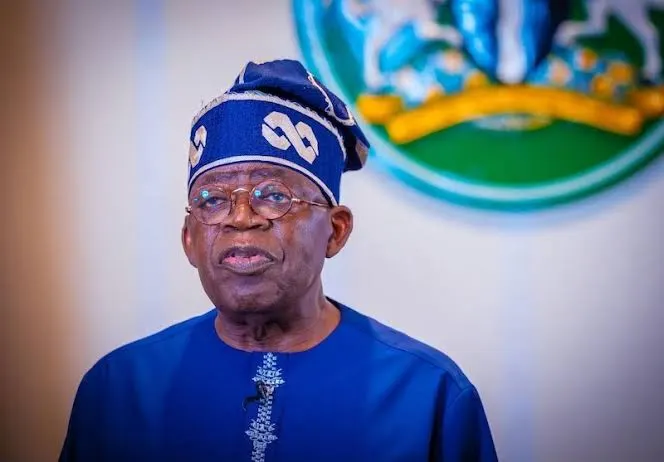
President Bola Tinubu declared that Nigeria will now focus on processing cocoa within the country before exporting finished products.
The decision is aimed at creating jobs, increasing earnings, and ensuring the nation benefits more from one of its most valuable agricultural products.
The announcement came during the Cocoa Value Addition Summit in Abuja, where the Federal Government also unveiled a regional partnership with Ghana, Côte d’Ivoire, and Cameroon.
Together, the countries hope to strengthen Africa’s position in the global cocoa market while keeping more value within the continent.
Represented by the Minister of Agriculture and Food Security, Senator Abubakar Kyari, President Tinubu stressed that the era of exporting raw cocoa without adding value has come to an end.
He said, “Nigeria will no longer export raw cocoa while exporting finished products. With our cocoa, we will now process it at home and sell it to the world on our own terms. Let no one mistake this for rhetoric. In Sagamu, Ogun State, Nigerian investors have built a 70,000-tonne processing facility, the largest this nation has ever seen. Our national production capacity has crossed 150,000 tonnes a year, and it is growing.”
The Nigeria cocoa processing plan, which forms a key part of the government’s industrial strategy, is expected to encourage local manufacturing instead of depending on foreign factories.
In addition, the Federal Government launched the Cocoa Value Addition Accord. The agreement brings together cocoa-producing states, farmer groups, processors, financial institutions, and research bodies under one implementation framework.
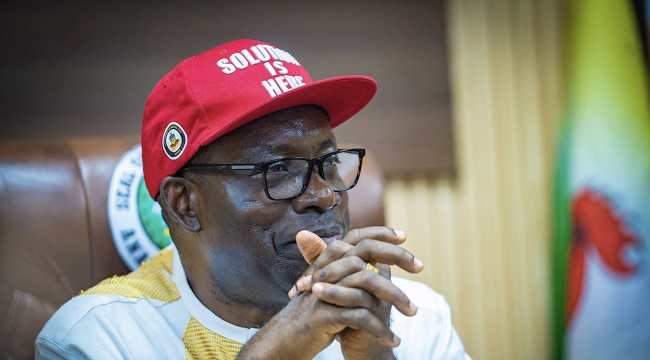
Meanwhile, the Minister of State for Industry, Senator John Owan Enoh, explained that the initiative seeks to ensure cocoa-producing nations enjoy a greater share of the global chocolate business, which is valued at more than $100 billion every year.
According to him, many African countries continue to produce most of the world’s cocoa beans.
He said, “We grow the miracle. Others bottle it. We export the anonymous sack and import back the branded box, paying at both ends of the transaction.”
Furthermore, Enoh described the gap between exporting raw cocoa and producing finished chocolate as one of Africa’s greatest industrial opportunities.
He noted that cocoa has already been identified as one of the priority sectors under the Nigeria Industrial Policy 2025. Therefore, greater attention will now be given to expanding local factories and increasing exports of processed cocoa products.
To support the transition, the Bank of Industry will establish dedicated financing for cocoa processors. The funding is expected to help businesses build processing plants while supporting farmers who supply cocoa beans.
The government also plans to introduce a national cocoa traceability system. Consequently, Nigerian cocoa products will be able to meet growing international quality and sustainability standards required in global markets.
Meanwhile, the Delivery Council created under the Cocoa Value Addition Accord will monitor implementation. Annual public reviews will also be conducted to ensure the goals are achieved.
Enoh encouraged investors to establish chocolate factories and processing plants in Nigeria instead of exporting raw beans overseas. He believes local investment will strengthen manufacturing and reduce dependence on imported finished products.
The regional partnership also received support from Ghana’s Cocoa Board Chief Executive, Dr. Ransford Abbey.
He urged the four participating countries to maximise opportunities provided by the African Continental Free Trade Area (AfCFTA).
He said African nations should trade processed cocoa products freely while reducing dependence on overseas markets.
Dr. Abbey also called for stronger cooperation among cocoa-producing countries to improve pricing power.
He stated, “As separate nations, global buyers play us against one another to crash prices. But as a unified front, Africa should set the market’s direction. Ghana and Côte d’Ivoire account for 60 per cent of global output. When Nigeria and Cameroon join the Initiative, we will together control a decisive 75 per cent of global output.”
According to him, the new alliance could help cocoa-producing countries secure fair prices while encouraging local production and regional trade.
The government believes the new strategy will transform Nigeria from a supplier of raw materials into a leading producer of finished cocoa products.
If fully implemented, the initiative could increase export earnings, strengthen manufacturing, improve farmers’ incomes, and position Nigeria as a stronger player in the global chocolate industry.