

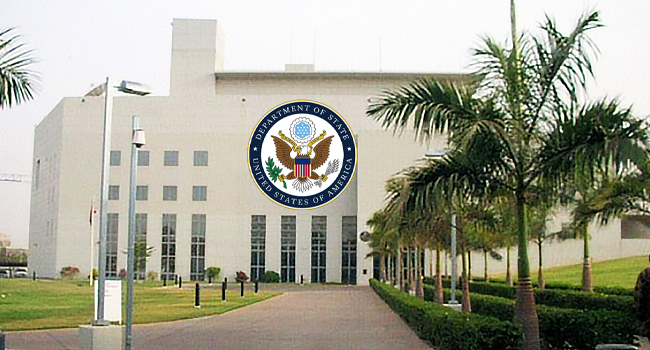
The United States has authorized a partial evacuation of its embassy staff in Nigeria. The decision comes amid what officials describe as a worsening security situation across the country.
According to the advisory released on April 8, non-emergency US government employees and their families have been permitted to leave Abuja.
“On April 8, 2026, the Department of State authorized non-emergency U.S. government employees and U.S. government employee family members to leave U.S. Embassy Abuja due to the deteriorating security situation,” the advisory stated.
Moreover, the United States has maintained Nigeria at a “Level 3: Reconsider Travel” rating. Meanwhile, several states have been placed under the stricter “Level 4: Do Not Travel” category.
In addition, five more states were recently added to the high-risk list. These include Plateau, Jigawa, Kwara, Niger, and Taraba. As a result, the number of restricted states has increased to 23.
The advisory explained that multiple threats remain active. These include crime, terrorism, kidnapping, and civil unrest. Therefore, travelers are being urged to exercise extreme caution.
“Reconsider travel to Nigeria due to crime, terrorism, unrest, kidnapping, and inconsistent availability of health care services. Some areas have increased risk,” it added.

Meanwhile, northern states such as Borno, Yobe, and Kaduna were highlighted for terrorism-related risks. Furthermore, other regions were flagged due to widespread violence and armed crime.
The situation in southern states was also addressed. Authorities warned that crime and kidnapping risks remain high in several areas. Violent protests and gang activities were also mentioned as ongoing concerns.
“The security situation in these states is unstable and uncertain due to civil unrest,” the advisory noted.
In addition, US officials pointed out that attacks could occur without warning. Public spaces such as markets and places of worship were listed as possible targets.
Healthcare challenges were also highlighted. The advisory noted that medical services in Nigeria remain limited and may not meet international standards.
However, the US government has advised its citizens to stay alert rather than panic. Travelers are encouraged to enroll in safety programs and avoid large gatherings.