


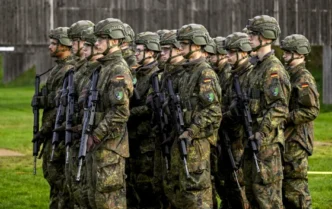
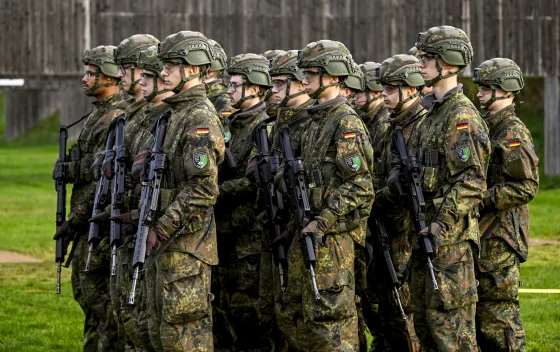
A surprising legal shift in Germany has new rules could require young men to seek approval before leaving the country for extended periods.
The move, which has raised eyebrows across Europe, comes as the country quietly strengthens its military structure.
Under the updated law, German men aged between 17 and 45 may need permission before traveling abroad for more than three months.
This development has been linked to broader efforts to prepare for potential future military needs.
Meanwhile, officials insist the measure is not as strict as it sounds.
The change has been introduced as part of adjustments to Germany military travel rules, which are rooted in Cold War-era legislation. However, the timing has drawn attention, especially as global tensions remain high and defense strategies evolve.
According to reports, the law now states that “male persons must obtain permission from the competent career centre of the Bundeswehr (German armed forces) after reaching the age of 17 if they wish to leave the Federal Republic of Germany for more than three months”.
Previously, such restrictions applied only during national emergencies. However, the updated version expands its scope significantly.
A spokesperson for Germany’s defence ministry clarified that approvals are expected to be granted in most cases. They noted that military service remains voluntary at this stage. Therefore, the rule is largely seen as a monitoring system rather than a strict travel ban.
Moreover, officials explained that the regulation is not actively enforced under normal conditions. It was stated that the system “had no practical relevance; in particular, it is not subject to penalties”. Instead, it is designed for emergency preparedness. Authorities say the military “must know who may be staying abroad for an extended period”.

Meanwhile, Germany continues to push for a stronger armed force. The country aims to increase troop numbers from 180,000 to 260,000.
This shift follows the reintroduction of voluntary military service in late 2025. However, discussions about full conscription have also resurfaced, driven by ongoing global conflicts, including the war in Ukraine.
Furthermore, exemptions are being considered to reduce unnecessary bureaucracy. Officials have emphasized that everyday travel will not be disrupted for most citizens. However, the Germany military travel rules highlight a growing focus on national readiness.
Across Europe, similar conversations are taking place. While the UK has ruled out conscription, efforts to boost military recruitment have intensified. Therefore, Germany’s move reflects a wider trend among NATO nations seeking to strengthen defense capabilities.










Germany not taking any chances. Let’s hope it doesn’t get to war