

In a move that has sparked widespread reactions, Nigeria has entered a new agreement with the United Kingdom on deportation and migration control.
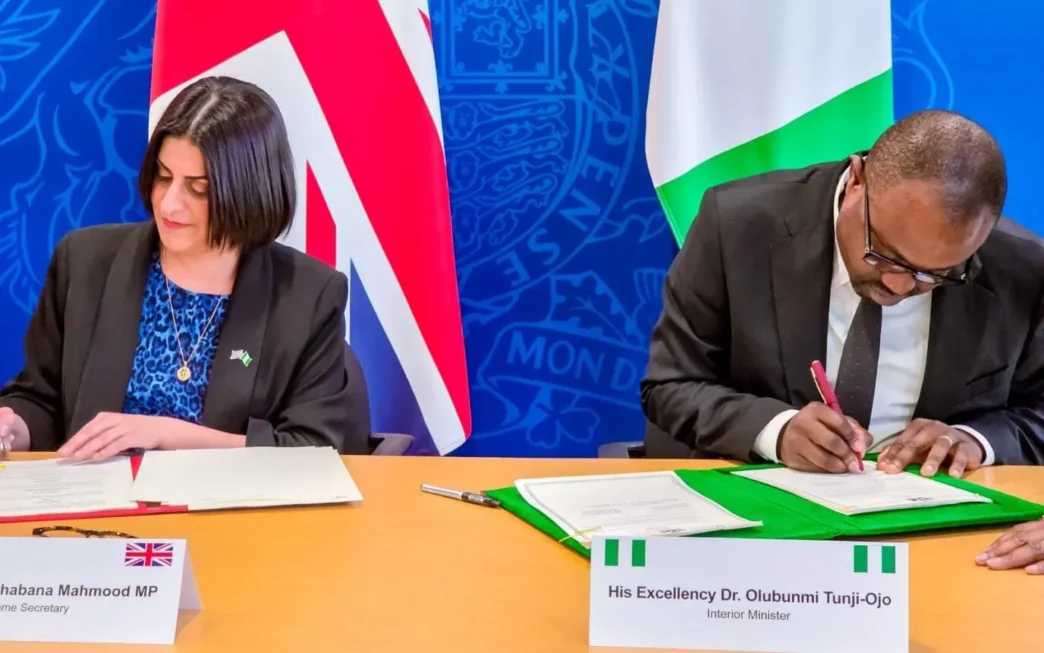
The UK Nigeria deportation deal was signed during President Bola Tinubu’s state visit to the UK. It involves Nigeria’s Minister of Interior, Olubunmi Tunji-Ojo, and UK Home Secretary, Shabana Mahmood. Under the agreement, the UK will now be able to deport failed asylum seekers and convicted offenders to Nigeria. Moreover, visa overstayers may also be returned under the same arrangement.
This deal introduces a key change in how deportations will be handled. Nigeria will now accept UK-issued identification letters. These documents will serve as an alternative to passports. Previously, emergency travel documents were required for such processes.
However, this new approach is expected to remove delays. It will also make deportations faster and more efficient. Reports indicate that many individuals could be impacted by the agreement. Currently, hundreds of Nigerians in the UK face deportation.
There are about 961 failed asylum seekers who have exhausted their appeals. In addition, over 1,100 Nigerian offenders are awaiting deportation.
Meanwhile, it remains unclear whether non-Nigerians will also be included. The timeline and financial terms of the deal have not been disclosed. Speaking on the agreement, Tunji-Ojo defended Nigeria’s position. He stressed the importance of responsibility in international relations.
He said, “we are totally committed to being a responsible country in fulfilling our core obligations.”
He added, “And for us to sustain that relationship, we must remember: ‘He who comes to equity must come with clean hands.’ So, we need to be as open and as fair as possible,” the minister said.
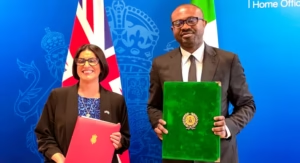
On the UK side, officials described Nigeria as a key partner. They emphasised fairness and strict enforcement.
“We owe everyone across the system fairness,” Alex Norris said.
He added that “anyone who abuses our systems, breaks our laws or tries to cheat their way into Britain will be stopped and removed.”
Beyond deportation, the agreement includes stronger cooperation on crime. Both countries will share intelligence on criminal networks. In addition, joint operations will target visa fraud and illegal migration routes. These include fake jobs, sham marriages, and forged documents.
Meanwhile, a new system called a “fusion cell” will be introduced. It will allow faster sharing of information between agencies. Banks, tech firms, and public institutions will also be involved. Therefore, action against online scams is expected to improve.
The deal signals a deeper partnership between Nigeria and the UK.