


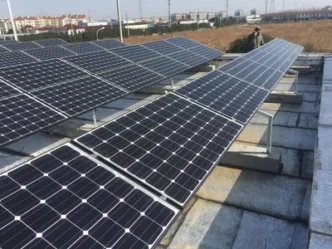
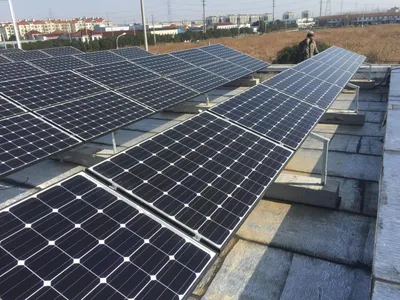
Nigeria’s push toward renewable energy received, a major boost after the Federal Government approved N100 billion to power public institutions with solar electricity.
The decision, is expected to reduce electricity challenges affecting government facilities across the country.
The new intervention is being implemented under the National Public Sector Solarization Initiative (NPSSI). The programme is designed to supply clean and reliable electricity to institutions that struggle with unstable power or high energy bills.
Moreover, officials say the move forms part of the government’s broader effort to improve power supply through renewable energy. It is also expected to reduce dependence on conventional electricity sources that have often been unreliable.
The development was disclosed by the Managing Director of the Rural Electrification Agency (REA), Engr. Abba Aliyu, during a visit by the Administrator of the National Judicial Institute (NJI), Justice Babatunde Adejumo, to the agency’s headquarters in Abuja.
Aliyu explained that the initiative was personally approved by President Bola Tinubu to address long-standing electricity problems within public institutions.
“President Bola Tinubu approved N100 billion for the National Public Sector Solarization Initiative and this is where the National Judicial Institute can benefit,” Aliyu said.
The National Public Sector Solarization Initiative aims to support institutions that either lack stable electricity or struggle to pay rising power bills. Therefore, solar mini-grid systems will be installed in selected facilities across the country.
Meanwhile, the REA boss revealed that the project is already being implemented in several government establishments. These include security agencies, anti-corruption bodies and public hospitals.

According to him, institutions such as the Department of State Services, the Economic and Financial Crimes Commission and the Independent Corrupt Practices and Other Related Offences Commission are already benefiting.
In addition, the National Hospital Abuja and several educational institutions nationwide have also been included in the ongoing programme.
Furthermore, Aliyu explained that the agency plans to conduct an energy assessment at the National Judicial Institute before installing a solar mini-grid system.
“Once the energy audit is completed, we will determine the size of the mini-grid and the distribution network that will be deployed,” he said.
The audit will help determine the electricity needs of the institute. Consequently, engineers will design the most suitable solar system for the facility.
Aliyu also assured the management of the institute that it would benefit from the programme as the renewable energy infrastructure expands.
Meanwhile, Justice Babatunde Adejumo highlighted the importance of stable electricity for judicial institutions. According to him, reliable power supply is essential for modern training and legal research.
He noted that judicial education increasingly depends on digital systems, research tools and online learning platforms. However, these systems cannot function effectively without consistent electricity.
Therefore, the solarisation programme is expected to improve operational efficiency in many government institutions.