

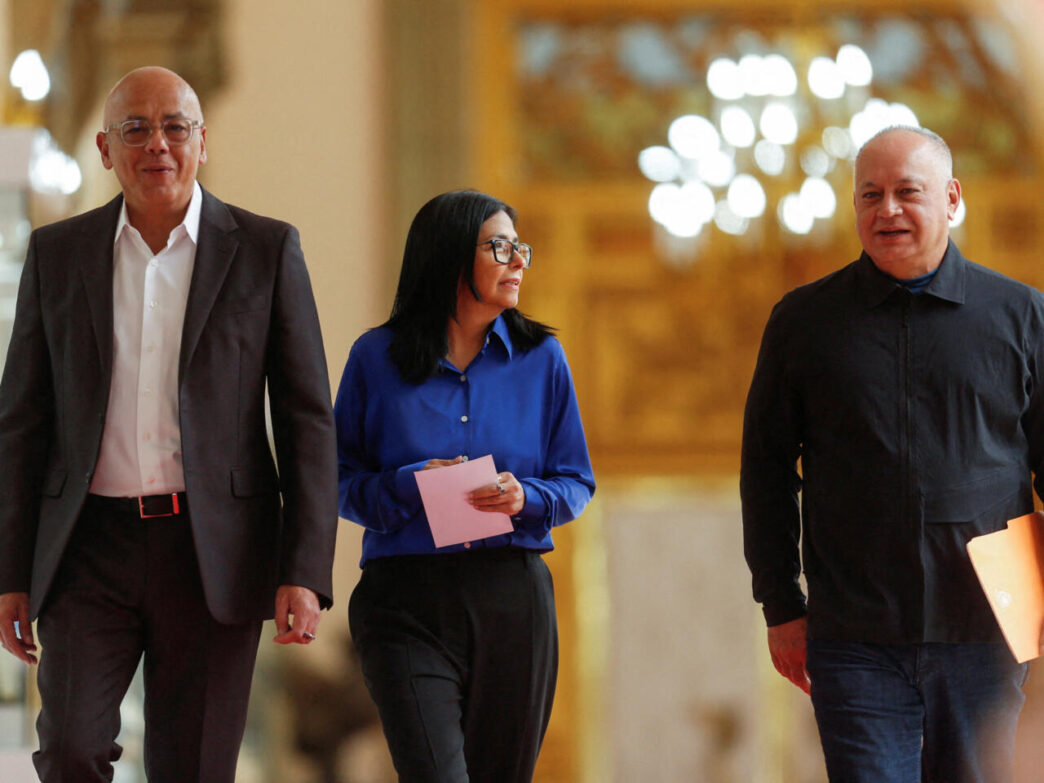
Venezuela’s fragile political transition took a turn on Sunday after acting president Delcy Rodríguez openly challenged Washington’s growing influence.
The remarks came less than a month after she assumed the interim role following the dramatic US capture of former leader Nicolás Maduro.
Rodríguez, who has been backed by the United States to stabilize the country, appeared to draw a clear line.
Speaking before oil workers in Puerto La Cruz, she signaled frustration with what she described as external pressure on Venezuela’s internal affairs.
“Enough already of Washington’s orders over politicians in Venezuela,” Rodríguez declared at the event, which was aired on state television.
Her statement immediately echoed across political circles and oil markets.
The acting president stressed that Venezuela must be allowed to settle its own disputes.
“Let Venezuelan politics resolve our differences and our internal conflicts. This Republic has paid a very high price for having to confront the consequences of fascism and extremism in our country,” she said.
However, they did not signal a complete break with Washington. Rodríguez has avoided direct confrontation since being endorsed by US President Donald Trump after Maduro’s arrest.
The White House has kept pressure on Caracas since early January. Maduro and his wife, Cilia Flores, were seized in a raid and taken to the United States. Charges were later filed against the former leader, deepening tensions.
Meanwhile, Washington has been pushing for policy changes tied to oil production. Venezuela’s oil industry remains the backbone of its economy. The country holds the world’s largest reserves of extra-heavy crude, which can be refined in US facilities.
Days after US strikes on Caracas, American officials outlined several demands. These reportedly included cutting ties with China, Iran, Russia, and Cuba. In addition, Venezuela was urged to partner mainly with US oil firms.
Rodríguez has been expected to cooperate on energy policy. Moreover, she was seen as a bridge between Maduro loyalists and international partners.
Inside Venezuela, divisions remain sharp. Maduro loyalists, left-wing opposition groups, and “Chavistas No-Maduristas” continue to clash over the country’s future.