

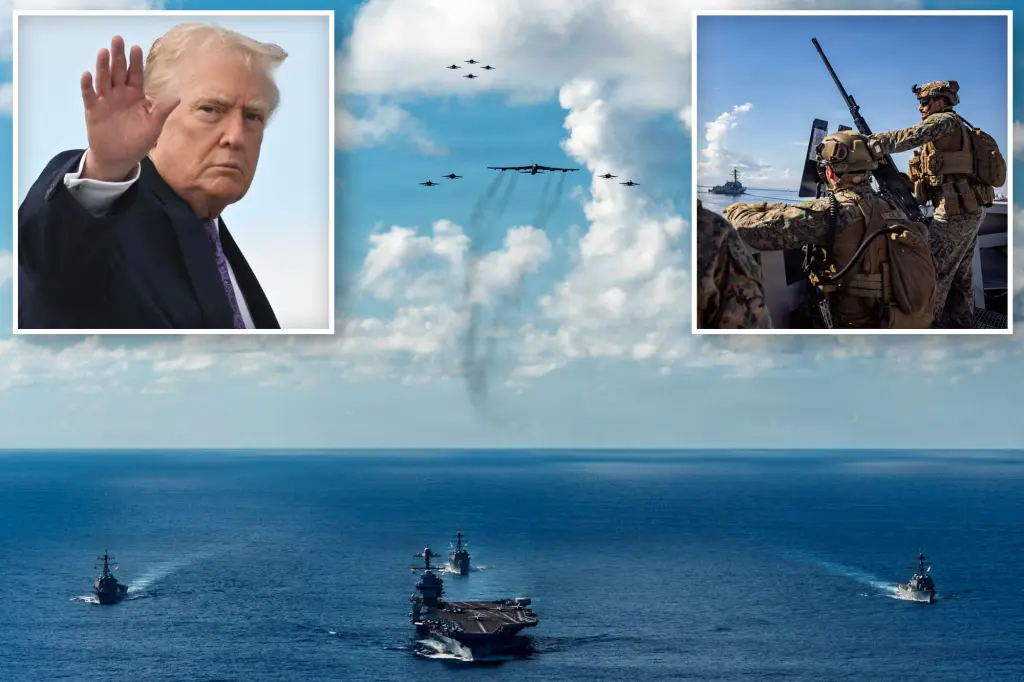
A major military buildup is unfolding as US warships in the Caribbean have increased to more than ten vessels, including America’s largest aircraft carrier, the USS Gerald R. Ford.
The expanded military presence was confirmed after the US Navy positioned the ships near Venezuelan waters.
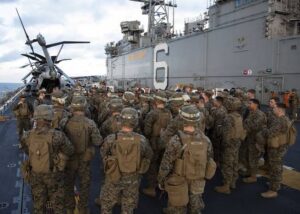
Moreover, a Marine Expeditionary Unit capable of launching an amphibious assault has also been stationed in the region, signalling a stronger stance against the flow of illegal drugs entering the United States.
Secretary of the Navy, John Phelan, explained the mission during an interview with Fox News, stressing the urgency behind the move.
“The military’s job is to defend the homeland,” he said. “That’s exactly what we’re doing, and we’re using our best assets to defend the homeland.”
Furthermore, he linked the operation to the devastating impact of drug trafficking on American families.
“Drugs kill more Americans than we’ve ever lost in wars,” Phelan added.
“So I think at the end of the day, the president has correctly identified this as an attack on the country, which it is.”
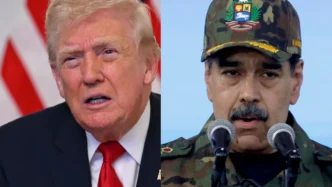
The US has blamed Venezuela’s socialist leader, Nicolas Maduro, for allowing narcotics vessels to leave the country unchecked.
Meanwhile, Washington believes the expanded naval presence will disrupt several trafficking routes.
Among the 11 ships positioned in the Caribbean is the USS Ford, which leads a Carrier Strike Group with more than 70 aircraft drawn from bases in Virginia, Florida and Washington.
In addition, the amphibious assault ship USS Iwo Jima, designed to carry Harrier II jets, is also deployed.
Guided-missile destroyers such as the USS Gravely and USS Stockdale are operating alongside larger cruisers including the USS Lake Erie and USS Gettysburg.
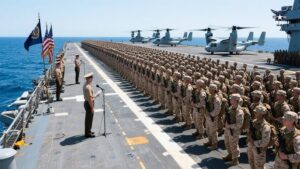
Up to 2,200 Marines from North Carolina are stationed across the ships, while about 5,000 additional personnel operate from bases in Puerto Rico.
Therefore, nearly 15,000 troops are now in the region, following the reopening of the Roosevelt Roads naval base.
Phelan also noted the administration’s long-term goal to rebuild America’s industrial strength.
“We hollowed out our manufacturing base in this country,” he said.
“We’re gonna spend the next 10 years teaching people how to use their hands, because those are going to be the important skills.”
The deployment of US warships in the Caribbean continues to raise international questions about the next steps in US-Venezuela relations, especially as both sides refuse to back down.