

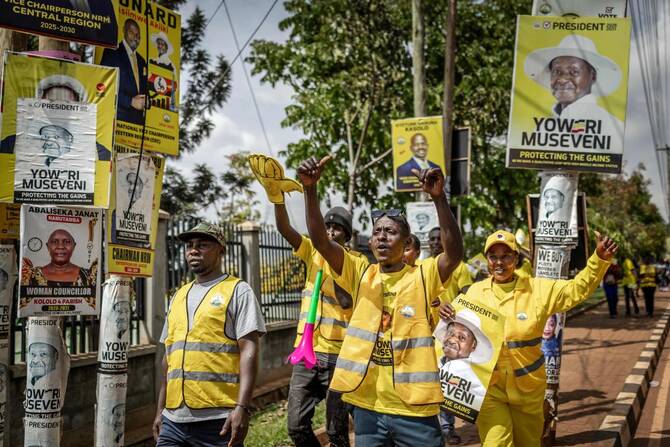
Uganda has ordered a nationwide internet shutdown just days before a tightly watched general election.
President Yoweri Museveni is seeking to extend his nearly 40-year grip on power.
The internet blackout was ordered on Tuesday, January 13, less than 48 hours before voting begins.
It was issued through a formal notice sent to service providers by the Uganda Communications Commission.
The directive surprised many, especially after repeated government denials.
According to the notice, the shutdown was aimed at controlling online risks during the election period.
The letter said the measure was needed to “mitigate the rapid spread of online misinformation, disinformation, electoral fraud and related risks, as well as preventing of incitement to violence that could affect public confidence and national security during the election period.”
Government officials later confirmed the authenticity of the notice.
However, no public announcement was made by the government to explain the decision.
Officials privately told AFP that authorities did not want to “own” the decision publicly.
The blackout was scheduled to start at 6:00 pm local time and remain in place until further notice.
Meanwhile, essential government services were said to be exempted from the suspension.
Ordinary citizens, businesses, and media platforms were expected to be affected nationwide.
This sudden silence online has raised questions about transparency and electoral fairness.
The Uganda internet blackout has revived memories of the 2021 election. During that vote, internet access was also cut across the country.
That election was later marred by claims of rigging and strong state action against opposition figures.
Moreover, Bobi Wine, Museveni’s main challenger in 2021, is again contesting.
The singer-turned-politician remains a popular figure among young voters.
His supporters have often relied on social media to organize and share information.
In addition, the government had earlier dismissed rumours of another shutdown.
Officials described such claims as false and designed to create fear.
Therefore, the timing of this decision has deepened public skepticism.
However, the blackout could limit access to real-time election updates. It may also affect election monitoring and citizen reporting. Furthermore, rights groups have warned that such actions weaken democratic trust.