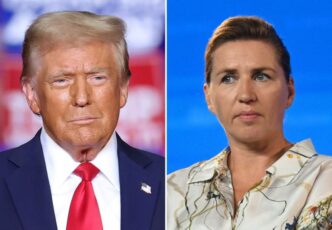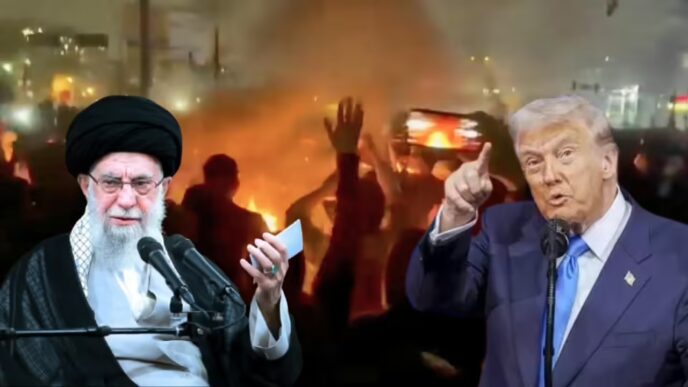


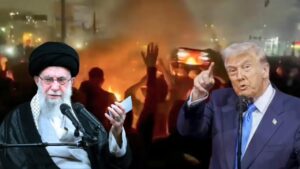
The United States President, Donald Trump, has revealed that Iran’s leadership has reached out to him to begin negotiations, amid escalating protests and mounting international concern over deadly crackdowns inside the country.
Speaking on Sunday, Trump said Iran’s leaders had made contact following his repeated warnings of possible US military action.
The revelation came as protests across Iran entered a second week, therefore marking one of the most serious challenges to the country’s leadership in decades.
Iran has been rocked by nationwide demonstrations that initially began over rising living costs.
However, the unrest has since grown into a broader challenge to the theocratic system that has governed the country since the 1979 revolution.
Despite a near-total internet shutdown imposed by authorities, reports and videos have continued to emerge.
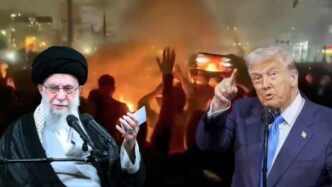
These images show crowds gathering in Tehran and other major cities, chanting against the government, while security forces respond with force.
Speaking to reporters aboard Air Force One, Trump said, “The leaders of Iran called yesterday,”adding that “a meeting is being set up… They want to negotiate.” However, he also warned that “we may have to act before a meeting,” suggesting that military options remain on the table.
Meanwhile, rights groups have painted a grim picture of events on the ground. The US-based Center for Human Rights in Iran said it had received credible eyewitness accounts indicating that hundreds of protesters may have been killed during the blackout.
“A massacre is unfolding,” the group said.
In addition, Norway-based Iran Human Rights confirmed at least 192 deaths.
However, it warned that the true number could be far higher. Unverified reports suggest that several hundred, and possibly more than 2,000, people may have been killed.
The group also estimated that more than 2,600 protesters have been arrested.
A disturbing video circulating online showed dozens of bodies outside a morgue south of Tehran.
The footage, geolocated to Kahrizak, showed bodies wrapped in black bags as relatives searched for loved ones.
Meanwhile, daily life in Tehran has been severely disrupted. An AFP journalist described empty streets, rising food prices, and shops closing early as security forces increased their presence.
Iranian officials, however, have sought to downplay the scale of the unrest. Tehran Governor Mohammad-Sadegh Motamedian said demonstrations were decreasing, while state television showed images of calm streets.
Reacting to Trump’s threats, Iran’s parliament speaker Mohammad Bagher Ghalibaf warned that US forces would be considered “legitimate targets” if military action occurred.
Meanwhile, Reza Pahlavi, the US-based son of Iran’s former shah, said he was ready to return and lead a democratic transition. He urged security forces to side with protesters and reject further violence.
Therefore, as Iran protests continue and diplomatic signals emerge, the situation remains volatile.
Whether talks will materialize or tensions will escalate further remains uncertain, however the coming days may prove decisive for Iran’s future.