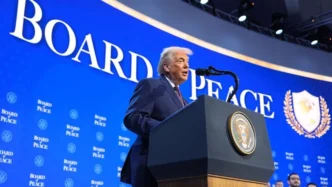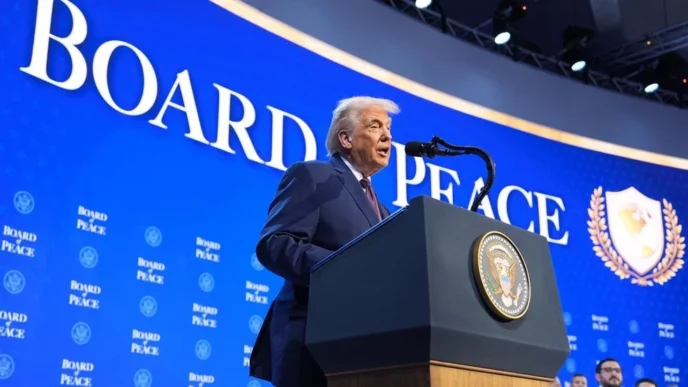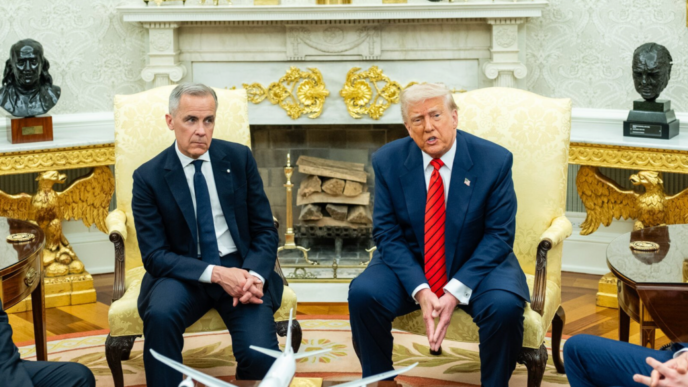


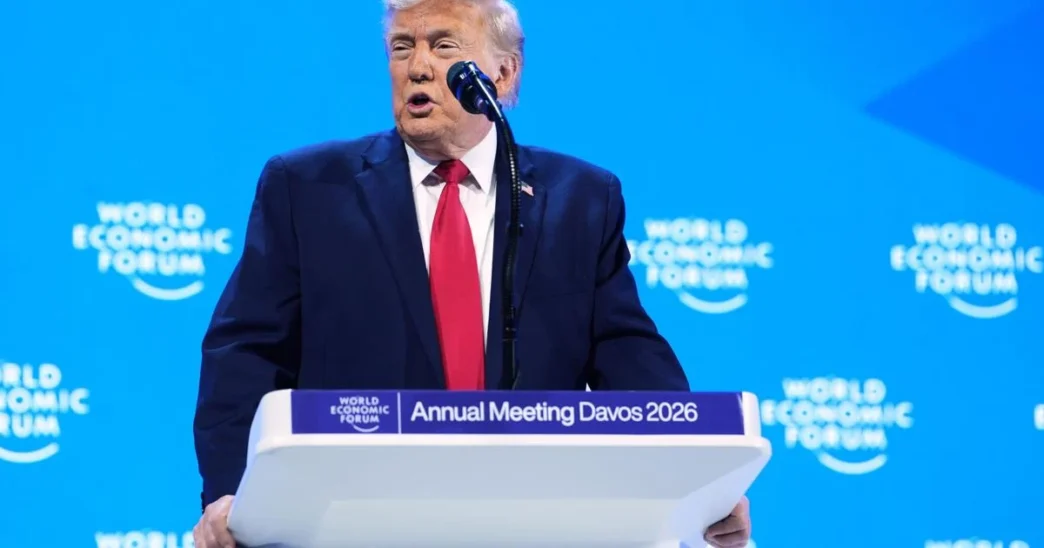
US President Donald Trump has stepped back from a looming wave of tariffs on several European countries.
The decision followed what he described as a fresh framework agreement involving Greenland and the wider Arctic region, unveiled during high-level talks in Davos.
The shift was announced after Trump met NATO Secretary-General Mark Rutte on the sidelines of the World Economic Forum.
According to the US president, the discussions produced what he called “the framework of a future deal with respect to Greenland and, in fact, the entire Arctic Region.”
The statement immediately signalled a change in tone from earlier trade threats.
The announcement was later shared on Trump’s Truth Social platform, where it was framed as a major step tied to security, trade, and long-term cooperation in the Arctic.
When questioned about whether the framework aligned with his long-standing interest in the United States owning Greenland, Trump said the situation was “a little bit complex.”
However, he stopped short of making any claim over the territory.
Meanwhile, Rutte downplayed speculation, stressing that Denmark’s sovereignty over Greenland had not been part of the talks.
Following the Davos meeting, it was confirmed that the United States would suspend tariffs on eight European countries.
These tariffs had been scheduled to take effect on February 1. Moreover, the reversal eased fears of renewed trade tension between Washington and Europe.
Several European governments welcomed the move.
Denmark, Italy, and the Netherlands described the decision as a positive signal for economic stability and transatlantic ties.
The tariff threat had raised concern across Europe, especially as markets were already facing pressure.
Earlier in Davos, Trump also attempted to calm growing anxiety over his Greenland comments. He said he would not use force to take control of the territory.
“While the United States had the power to act,” he explained, it would not rely on “excessive strength and force.” Instead, diplomacy was emphasised.
This development has been widely viewed especially given Trump’s earlier hard stance on trade.
In addition, the move has been linked to wider Arctic security interests involving NATO allies.