

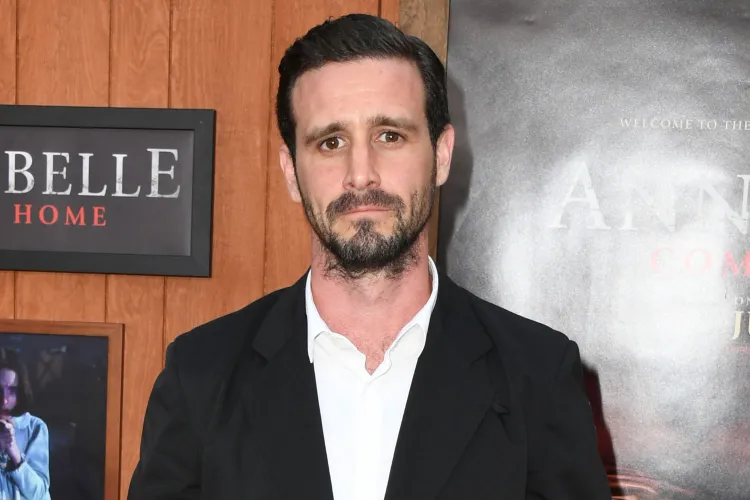
The entertainment world has been left stunned by the sudden death of actor James Ransone, best known for his role in The Wire.
The actor died at the age of 46, according to the Los Angeles County Medical Examiner, Ransone died in Los Angeles on Friday, December 19.
The death was ruled a suicide, Ransone, a married father of two, had remained active in film and television until recently.
Moreover, his wife, Jamie McPhee, shared a fundraiser supporting the National Alliance on Mental Illness (NAMI) on her social media profile.
Medical examiner records listed the cause of death as hanging. His body, according to officials, has been cleared for release.
Ransone rose to prominence through his portrayal of Ziggy Sobotka in the second season of HBO’s The Wire.
The character, the troubled son of dock union leader Frank Sobotka, became one of the show’s most memorable figures.
He appeared in 12 episodes during the 2003 season, a role that cemented his place in television history.
However, his career stretched far beyond Baltimore’s docks. In addition, Ransone featured in acclaimed series such as Generation Kill, Treme, and Bosch.
His final television appearance came earlier this year in a Season 2 episode of Poker Face.
On the big screen, Ransone built a steady film career.

He starred in Prom Night (2008), Sinister (2012), Sinister 2 (2015), and Tangerine (2015).
Furthermore, he appeared in It Chapter Two (2019) and The Black Phone (2021).
He was also set to feature in Black Phone 2, scheduled for release in 2025.
Beyond acting, Ransone’s life story included painful personal struggles. In 2021, he publicly revealed that he was a survivor of sexual abuse.
He accused his former tutor, Timothy Rualo, of abusing him repeatedly in 1992.
In a powerful Instagram post, Ransone wrote, “We did very little math.”
“The strongest memory I have of the abuse was washing blood and feces out of my sheets after you left.”
“I remember doing this as a 12 year old because I was too ashamed to tell anyone.”
He explained that the alleged abuse led to “a lifetime of shame and embarrassment.”
Ransone said the trauma contributed to alcoholism and heroin addiction later in life.
After getting sober in 2006, he said he was “ready to confront” his past.
Although he reported the matter to police in 2020, prosecutors declined to pursue charges.
Meanwhile, Ransone continued working and speaking openly about survival and recovery.
The James Ransone death has therefore reopened conversations around mental health in the film industry.