

The death of an aspiring singer Ifunanya Nwangene has once again drawn attention to a silent health crisis in Nigeria.
Her death, which followed a snake bite in her Abuja apartment, has raised fresh concerns about access to life-saving treatment.
Speaking in an interview with Punch, the Medical Director of the Snakebite Hospital and Research Centre in Kaltungo, Gombe State, Dr Nicholas Amani, revealed that anti-snake venom remains scarce worldwide.
However, he stressed that the impact is most severe in poorer countries and rural communities.
According to Dr Amani, the global shortage is not accidental. He explained that snakebite victims are mostly farmers and rural dwellers who lack political influence. Therefore, the issue often receives little urgency from policymakers.
“The truth is that anti-snake venom is a scarce commodity all around the world. The reason is that snake bite mainly affects the less privileged, farmers, and rural dwellers people who do not really have a voice,” he said.
Moreover, he noted that even at international meetings, the same concern keeps resurfacing. “Everywhere we attend conferences and international meetings, it is the same issue, scarcity, scarcity. Ultimately, there are no free anti-snake venoms available. Most of them are now being sold by pharmacy vendors,” he added.

Dr Amani disclosed that even specialised hospitals currently lack adequate supplies. “I want to make it very clear that even in specialised hospitals, we do not actually have anti-snake venom in our facilities currently,” he explained. However, he said efforts are being made by government authorities, although solutions remain delayed.

Using Kaltungo as an example, he described a troubling reality. Patients are often forced to buy anti-venom from private sellers. “Even in Kaltungo, what you find is that it is pharmacists and business people in town who are supplying the anti-venom. Patients have to go and buy from them. So the issue of scarcity is real,” Amani said.
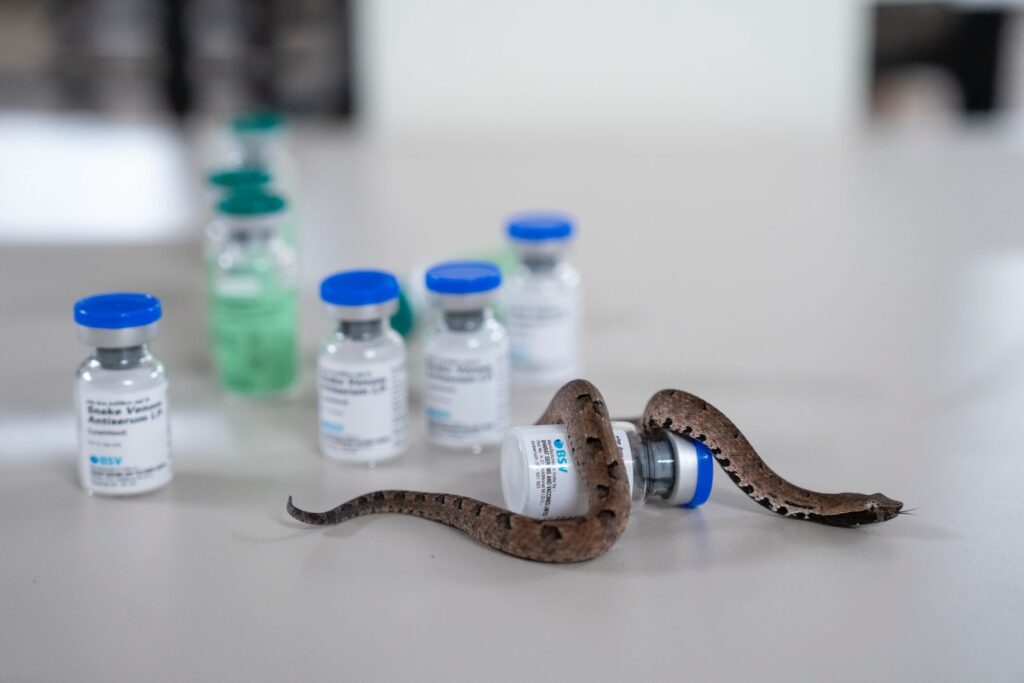
In addition, the cost of treatment has made survival even harder. Dr Amani revealed that a single vial now costs about N250,000. “Some patients require two or three vials,” he said.
PTherefore, families are pushed into extreme hardship. “The people who come with snake bites are very poor. They sell their farmlands and belongings just to buy one vial. Imagine when two or three vials are needed,” he lamented.
Meanwhile, health experts warn that without urgent intervention, more avoidable deaths may occur.