

Russia has accused NATO of preparing for a “major war” after a senior alliance official suggested that pre-emptive action against Vladimir Putin could be considered.
The claim has added new tension to Europe’s already uneasy security climate and sparked renewed debate about NATO’s evolving defence posture.
The warning followed comments from Admiral Giuseppe Cavo Dragone, the chair of NATO’s Military Committee, who said the alliance may need to act earlier rather than wait to respond.
In Moscow’s reaction, Russia argued that the West was “moving towards escalation,” even as Putin continues what European officials describe as a shadow campaign of cyberattacks, sabotage, and airspace breaches.
These actions, have pushed NATO members to reassess how to counter hybrid threats.
According to the Financial Times, Dragone said ongoing incidents from fires at foreign facilities to cyber intrusions have forced NATO to explore new strategies.
He stated that “being more aggressive or being proactive instead of reactive is something that we are thinking about.”
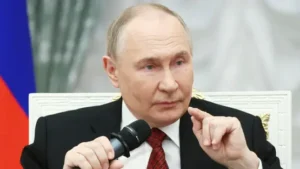
The core debate, he noted, concerns whether NATO should strike first in certain conditions.
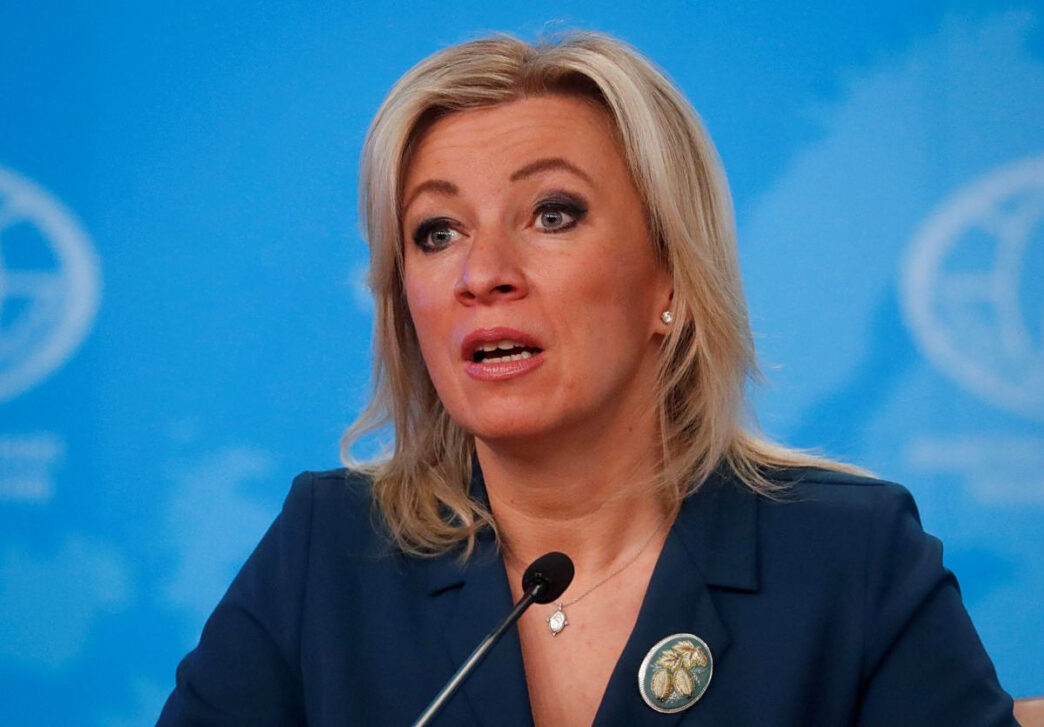
In response, Foreign Ministry spokeswoman Maria Zakharova labelled the remarks “an extremely irresponsible step” and insisted they reflected “the alliance’s readiness to continue moving towards escalation.”
She added that those making such statements “should be aware of the risks and possible consequences, including for the alliance members themselves.”
Russia’s ambassador to Belgium, Denis Gonchar, went further by alleging that Western leaders are “preparing for a major war with Russia” while “intimidating its population with the Kremlin’s non-existent plans to attack the alliance countries.”
The comments deepened Moscow’s criticism and highlighted growing distrust between both sides.
Meanwhile, peace discussions over the Ukraine conflict are ongoing.
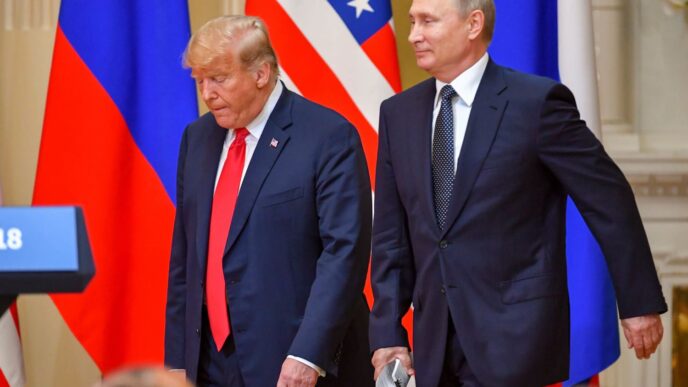
U.S. President Donald Trump said the talks were “going along well,” and Washington confirmed that Trump’s envoy, Steve Witkoff, will visit Moscow for further discussions.
However, Russia continued its attacks on Ukraine, where at least four people were killed in December
Several Eastern European states argue that the alliance can no longer rely on reactive measures alone.
One Baltic diplomat said, “If all we do is continue being reactive, we just invite Russia to keep trying.”
The debate over NATO pre-emptive action is expected to remain central as Europe navigates a period of heightened military and political uncertainty.