

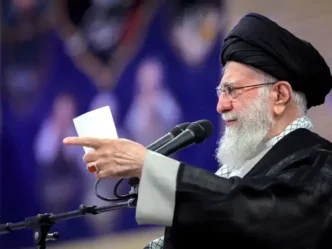
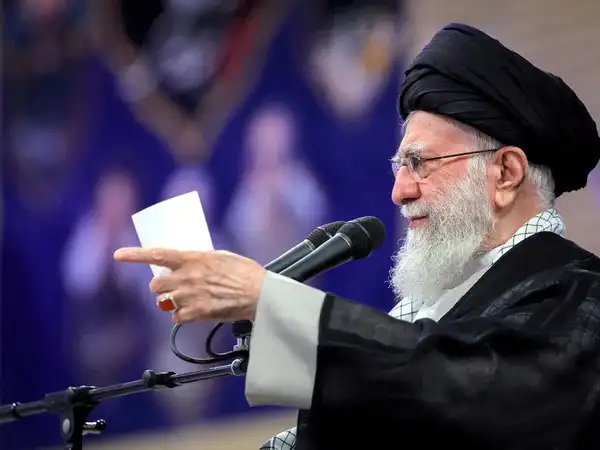
Israel’s Defence Minister, Israel Katz, has openly threatened to assassinate any Iranian leader chosen to replace Supreme Leader Ayatollah Ali Khamenei.
The warning comes just days after Khamenei was killed in US-Israeli strikes on Tehran.
The statement has further raised fears of escalation between Israel and Iran. Moreover, it signals that the leadership battle inside Tehran may now carry global consequences.
In a post shared on X, Katz delivered a blunt message. He wrote: “Any leader selected by the Iranian terror regime to continue leading the plan for Israel’s destruction, threatening the United States, the free world, and countries in the region, and suppressing the Iranian people, will be a certain target for assassination, no matter his name or where he hides.”
While such rhetoric is rare at this level, it reflects the deep hostility between the two nations.
Meanwhile, attention has shifted to Mojtaba Khamenei, the 56-year-old son of the late Ayatollah. He has been named as a leading figure who could succeed his father. According to Iranian opposition outlet Iran International, he was chosen by Iran’s Assembly of Experts under pressure from the Revolutionary Guards.
Mojtaba Khamenei is not a senior cleric. He has never held elected office and does not have a formal role in government. However, he served in the armed forces during the Iran-Iraq war. In addition, he is believed to hold strong influence behind the scenes, especially within the Iranian Revolutionary Guard Corps.
For years, he has been mentioned as a possible successor. Nevertheless, he was not included in a reported shortlist of three senior clerics identified by his father last year.
Reports also suggest that Ayatollah Khamenei opposed his son’s candidacy. The reason, it was said, was to avoid any resemblance to hereditary rule like that of the US-backed Shah monarchy before 1979.
The Israel threat to Iran’s new Supreme Leader has therefore added another layer of uncertainty. Leadership succession in Iran is already sensitive.
Furthermore, the broader conflict involving the United States, Israel, and Iran has destabilized the region.