

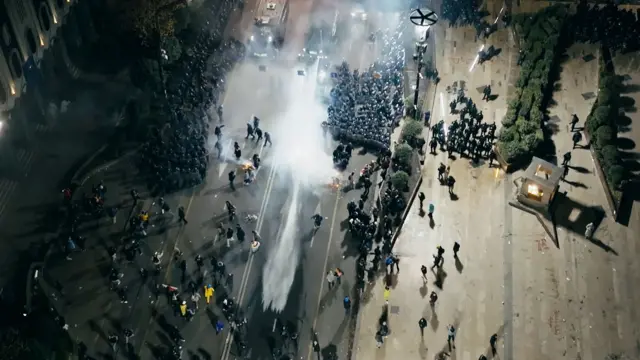
Georgia has opened a Georgia chemical weapon investigation after a BBC report alleged that security forces used a World War One era chemical agent on anti-government protesters last year.
The move has shocked many citizens, as the claim adds a new twist to the country’s ongoing political crisis.
Moreover, the timing has fueled renewed concerns about state conduct during months of unrest.
The BBC report stated that it had found evidence suggesting “Georgia’s authorities used a World War One era chemical weapon to quell anti government protesters last year.”
The allegation spread quickly online, drawing widespread attention because of how unexpected it appeared.
In response, the State Security Service announced an inquiry to determine “what information the BBC relied on,” including the testimonies and interviews mentioned in the investigation.
Furthermore, the agency said the report “contains indications of a crime which, if confirmed, would be directed against the life and health of citizens and would fundamentally violate their and society’s lawful interests.”
However, it also warned that the material “contains indications of a crime of the opposite nature, one that seriously harms Georgia’s national interests, its international image, and its reputation.”
Meanwhile, the BBC defended its report. It explained that its findings came from “hearing directly from the protestors themselves, multiple whistleblowers, UN experts, and experts inside Georgia, as well as a medical study and written documents and reports.”
The broadcaster added that “the reporting is firmly in the public interest, and the evidence gathered is clearly presented for audiences.”
Georgia has been battling political tension since last year’s disputed parliamentary election.
Many opposition supporters insisted the ruling Georgian Dream party rigged the vote.
In addition, anger grew when the government delayed plans to begin EU membership talks until 2028.
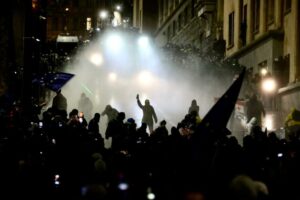
Therefore, protests spread across the country, and police responded with tear gas and water cannons.
Rights groups soon raised concerns. Both the national ombudsman and Amnesty International stated that detained protesters suffered treatment that amounted to “torture.”
The ruling party rejected the accusations and denied claims that the government was shifting toward a pro-Russian position.