



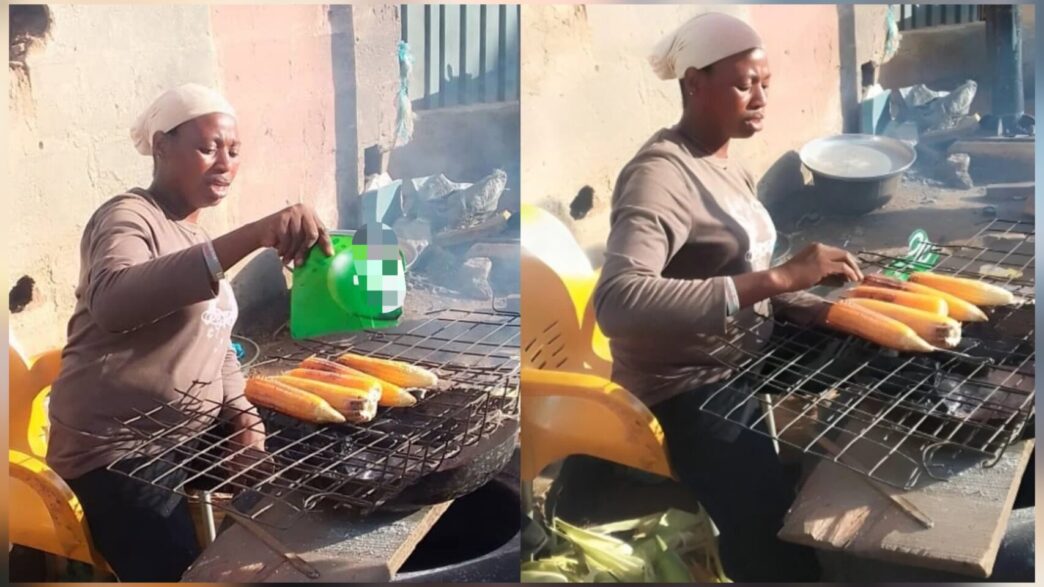
What started as a desperate move to support her family has become a thriving source of income for an Ibadan businesswoman.
After leaving her hairdressing profession behind, Mrs. Lateef Rukayat says selling roasted corn has transformed her finances and helped her keep her children in school despite rising living costs.
According Mrs. Lateef Rukayat, a mother of six says the trade generates enough income to support her household and pay the educational expenses of two children currently studying in higher institutions.
Speaking during an interview with Tribune On The Street, Rukayat shared how she switched careers after her hairdressing business failed to generate enough income. She explained that the decision, although difficult at first, eventually changed her family’s financial story.
According to her, she had always dreamed of becoming a professional hairdresser and completed her apprenticeship before opening her salon.
“Hairdresser is my hard-earned work; it’s my early dream work, and I did freedom after completion,”she said. “I started roasting corn when my hairdressing business was not moving. All my children are in school, with two of them in higher institutions.”
Rukayat disclosed that she entered the roasted corn business in January 2021 after obtaining a loan through a local lending scheme popularly known as “Network.”
The borrowed funds helped her purchase her first bag of corn and begin trading.
However, she explained that starting the business today is far more expensive because of inflation.
According to her, although a bag of corn once sold for between ₦30,000 and ₦35,000, prices have continued to fluctuate over time.
She noted that traders must also pay for transportation, charcoal, and packaging materials.
Consequently, many people now underestimate the true cost of running the business.
Despite those challenges, Rukayat said the business has remained profitable with careful management.
She explained that daily sales often provide enough income to support her family and reinvest in the business.
“With God’s mercy, on a daily basis, if I borrowed money and got like ₦20,000 to buy corn, I used to earn about ₦25,000 to ₦27,000 daily. From the earnings, I contribute and that’s what I collect in supporting my children’s schooling,” she said.
Based on her average daily earnings, the business can generate up to about ₦750,000 in monthly revenue before expenses.

However, Rukayat admitted that success does not come without risks.
She explained that roasted corn has a very short shelf life and must be sold fresh.
According to her, unsold corn quickly loses its taste and becomes difficult to sell the following day.
Furthermore, she recalled a period when rising costs forced her to increase the selling price from ₦200 to ₦400 per cob.
Rather than increasing her profits, customer demand dropped sharply.
As a result, she made little or no profit during that period.
Nevertheless, Rukayat believes determination and consistency remain essential for anyone hoping to succeed.
She also revealed that she has never benefited from any government grant or financial assistance.
Therefore, she appealed to the government to introduce support programmes for small business owners.
According to her, lower prices for essential goods and access to affordable loans would help traders grow their businesses and provide better lives for their families.