

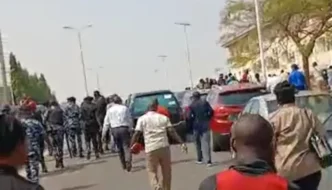
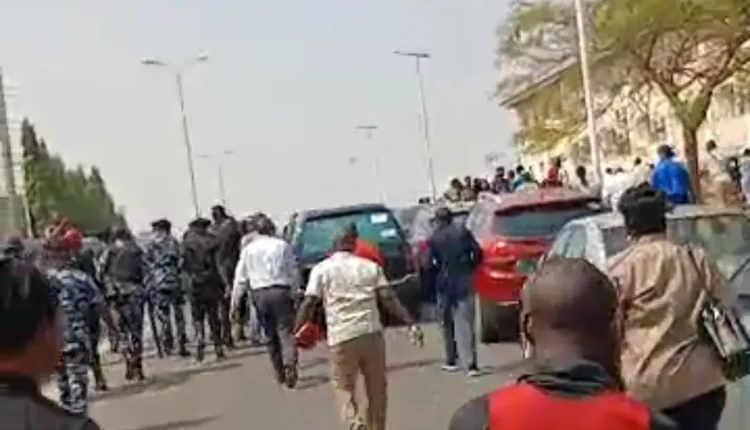
Tension gripped parts of Abuja on Monday, January 26, after aggrieved workers chased the motorcade of the Minister of the Federal Capital Territory, Nyesom Wike.
The dramatic incident followed growing anger over unresolved salary and welfare issues, which many described as long overdue.
Videos that circulated widely online showed a group of workers running after a vehicle allegedly conveying the minister.
The protesters were heard chanting loudly while moving toward the cars, demanding attention to their grievances.
Meanwhile, the situation highlighted rising frustration among public sector workers in the nation’s capital.
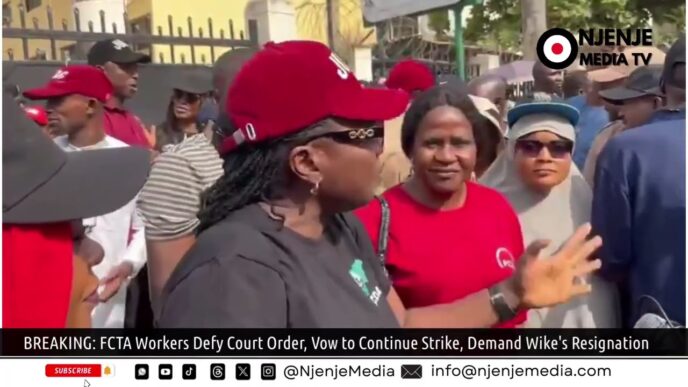
Earlier the same day, the workers, backed by the Nigeria Labour Congress, had staged a protest at the National Industrial Court in Abuja.
The action formed part of their ongoing indefinite strike, which has disrupted normal activities.
The workers are demanding the removal of the FCT minister and the payment of outstanding entitlements, which they say have been ignored for months.
At the court premises, placards with strong messages were displayed. Some read “Wike must go!!”, “Abuja no be Rivers”, “Pay promotion arrears”, “Enough is Enough” and “No working tools”.
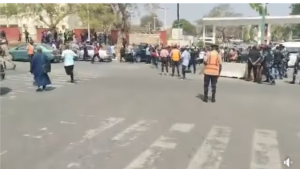
Witnesses at the scene said the mood was tense but controlled, although emotions were clearly running high.
The protest was triggered by what workers described as unresolved welfare concerns.
These include five months of unpaid salaries, long-standing promotion arrears, and poor working conditions.
According to union leaders, repeated appeals to authorities have failed to produce results. Therefore, the strike was described as the last option left.
However, the situation has also taken a legal turn. Minister Wike has taken the striking unions before the National Industrial Court. He is seeking an order to stop them from continuing the strike action.
This move has further deepened tensions, as workers insist their demands must be addressed before any return to work.
In addition, they warn that prolonged strikes could affect essential services in the capital. Meanwhile, residents continue to monitor developments closely.
Watch video below;