

The United States has announced moves that will affect thousands of Nigerian travellers, students and intending migrants from the start of 2026.
The decision, which came with little prior public warning, signals a tighter immigration stance that has already sparked concern across Nigeria.
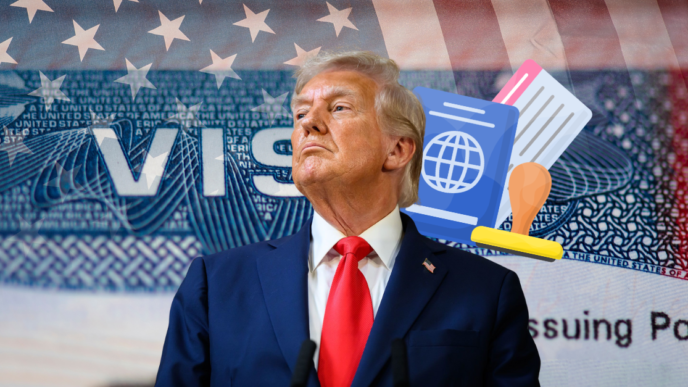
According to an official statement issued by the U.S. Department of State on Monday, December 22, visa issuance for Nigerian nationals will be partially suspended from January 1, 2026.
The policy affects several visa categories and was introduced under a new security directive.
The suspension applies to nonimmigrant B-1/B-2 visitor visas, as well as F, M and J student and exchange visitor visas.
In addition, most immigrant visa categories will also be affected, with only limited exemptions outlined by U.S. authorities.
The U.S. government said the decision follows Presidential Proclamation 10998, titled “Restricting and Limiting the Entry of Foreign Nationals to Protect the Security of the United States.”
The directive was described as part of broader efforts to strengthen national security controls.
However, Nigeria is not alone in the development. Several other countries have also been placed on the list.
These include Angola, Antigua and Barbuda, Benin, Burundi, Côte d’Ivoire, Cuba, Dominica, Gabon, The Gambia, Malawi, Mauritania, Senegal, Tanzania, Togo, Tonga, Venezuela, Zambia and Zimbabwe.
Despite the sweeping nature of the policy, some exemptions were clearly stated. These include immigrant visas for ethnic and religious minorities facing persecution in Iran.
In addition, dual nationals applying with passports from unaffected countries are exempted. Furthermore, Special Immigrant Visas for employees of the U.S. government remain unaffected.
Participants in certain major international sporting events are also excluded from the restriction.
Lawful permanent residents, commonly known as green card holders, will not be impacted. U.S. officials clarified that the U.S. visa suspension for Nigerians applies only to applicants who are outside the United States on the effective date.
It also applies to those who do not hold a valid visa as of January 1, 2026. Meanwhile, Nigerians who already have valid U.S. visas issued before that date will not be affected.
The Department of State stressed that no previously issued visas will be revoked under the proclamation.
Moreover, applicants can still submit visa applications and attend scheduled interviews. However, they may be found ineligible for visa issuance or denied entry under the new rules.
Therefore, while the process remains open on paper, the chances of approval may be limited.
This has raised concerns among students planning overseas education, families hoping to reunite, and businesses with U.S. travel plans.